BOOK ONE
CHAPTER ONE
Things are not well with the band in the wilderness. Jack the guitar player lost his pick and has been in a quiet mood for days. Bob the drummer is privately thinking about leaving the band. They walk through bleak forest country and the gear hangs heavy from their shoulders. The night before they made a fire and Frank the bass player burned a turnip to a crisp. That did not exactly lift their spirits, as one can imagine. Let us hope things take a turn for the better.
Frank learns that a turnip can be eaten raw. He makes a note of it in his diary. Jack makes a pick from a bird bone and Bob is not thinking about leaving the band anymore. He is thinking about food. Rick the singer suggests they find a restaurant where they can discuss the future. All they find are the ashes of a campfire and a carbonized turnip. They have been going in a circle.
It takes days to find a mountain and the larger part of another to climb it. It is hard on Bob carrying the kick drum, but they are all pretty exhausted. He and Rick argue about whether to go to a Chinese or an Italian restaurant should they find both. All they found so far is rock. The band reach the top of the mountain and observe the wilderness that surrounds them. Jack sits down on a rock. “Do you think we’re the only band in this wilderness?” he says. “I don’t know,” says Frank, “I’d hate to think so. There must be other bands out there.”
Their search remains fruitless and it is nearly Christmas when the band reach the ocean. Much can be said about Rick’s vocal skills, but he is an excellent ship builder, just like his father and his father’s father and his father’s father’s father before him. They build a ship on the beach and raise sail on the eighteenth day of the new year. A year that began seventeen days previously.
On the third day at sea Jack ties his guitar strings together to make a fishing line. Frank climbs the mast to get a bird’s-eye view of the ocean. He positions his fists like a spyglass and scans the horizon. “See anything?” says Bob at the helm. “Just water,” says Frank. Far beneath the ship an egg hatches and a fish is born at the bottom of the ocean. The baby fish looks at the world in wonder and gets eaten by a passing fish. The fish that ate the baby fish swims along and gets eaten by a bigger fish. The bigger fish swims along and gets caught by Jack, who uses his guitar as a fishing rod.
Meanwhile Bob is feeling useless, like a drummer among sailors and fishermen. He sets up his drums on the bow and performs a solo. All of a sudden the low repetitive sound of beating drums can be heard coming from a distance. “The island of women?” says Frank. “All hands,” says Rick. “Where is it coming from?” “Over there,” says Frank pointing his arm at the ocean. “Thataway.” The band have no luck finding the island of women. Jack believes it was all in Frank’s imagination. Rick thinks the sound of beating drums may have been a collective auditory hallucination brought on by Bob’s drum solo. Both are wrong.
Months pass and the band reach the shore of a new continent. As soon as they set foot on the beach the ship falls apart and disintegrates in the surf. They have grown beards and look like rock stars in their beard phase. They salvage the gear and look at the land before them. It is a desert country. “Think there’ll be a restaurant at the end of this desert?” says Bob.
Deep in the desert an Arab with a French horn plays ‘Clair de Lune’. The band stand and listen to the performance arms crossed over their beards. They look like Hindu yogi standing in the middle of a desert staring at an Arab French horn player. “Is this a mirage?” says Bob.
Having gone from forest to sea to desert they sit on a sand dune. Disillusionment brought on by a string of mirages and fata morganas has gotten the best of them. Close by the gear lies in the sand, rusty and weather beaten. They could use a haircut and the gear a tune-up, but to what purpose? The wind erased their footprints and the sea swallowed their vessel, making this narrative the only proof of their existence. They begin to realize the gravity of the situation.
“Do you think we’re the only band in this desert?” says Frank. “The way I see it, we’re the only band here,” says Jack. It is interesting, because it shows a subtle change. One might say that the band are expecting less out of life than before. Unbeknownst to them, this is a turning point in our story. They decide to stay put on the sand dune.
The future is not what it used to be. Bob beats the drums of extreme illusionless-ness, Rick wails about a long, lonely time and Frank and Jack play backup, trying to keep their beards out of the strings. It is the first time the band play together since they set out in the wilderness. Jack’s guitar solo captures the attention of a desert mouse. It can hear well on account of its big ears. The song ends and the mouse disappears in a hole in the sand. The moon begins its climb in the sky and the band return to their place on the sand dune.
By the time their beards reach their knees they leave the sand dune to pursue new hopes and ideals. Frank’s diary is an incoherent mess. His last entry reads ‘Sand. More sand.’ The band follow a path that only leads back. They are the makers of the path. Rick leads the way and Frank, Jack and Bob follow, in that order. Water, sea, these things are vague memories now. These dunes were not made by water. A storm is coming.
The sandstorm rages across the desert. The band, being in the middle of it, are not amused. Jack shouts words at Bob, who cannot make out the words Jack shouts at him. The words are taken by the wind and the sand, torn apart and turned into incomprehensible sounds. “Ee…aah…oiin.. e…ong…ay!” shouts Jack. “Aah…an.. eah…wooo!” shouts Bob. “Ollooo..eee!” hollers Rick. It is chaos out there in the wilderness.
The storm passes and the band dig up the gear in the sand. “We should have a crew for this shit,” says Frank to himself. He makes a note of it in his diary. The desert looks calm and peaceful. The band look like they have just been hit by a sandstorm. In the east a caravan passes on the horizon. “Look guys, another mirage,” says Bob. The caravan, carrying food and water, slowly moves out of view on the horizon while the band dig and another day awaits in the desert.
The next day the band make a new path in the desert. There is nothing along the path except the desert it crosses and there is nothing in the desert at all. “Is there an end to this desert?” says Bob. “There’s an end to all things,” says Rick. “Thank God, that means there’s an end to this conversation,” says Jack. The band walk singlefile up to a point from where, far ahead in the distance, they can see more desert.
The following day it is business as usual. Bob drags his kick drum through the sand and Frank wonders what to write in his diary. Not much worthy of recording has happened. Not much has happened at all. The desert looks the same it looked the day before and not a lot different than the day before that. If it has an end, this is not it.
Come morning the band take charge of their lives doing fitness exercises. Jack does push ups, Bob does sit ups, Frank jumps rope and Rick lifts cow skulls. Gone seem the days of wandering aimlessly. Gone seem the nights of sitting round the fire after having wandered aimlessly through the days. They last five minutes doing the exercises before collapsing in the sand. They lie still a long time until Rick says, “Let’s go.” They pick up the gear and walk.
In the afternoon they enjoy a moment of leisure in the sun. They sit in the sand watching the hustle and bustle of the desert. Jack holds his hands in such a way that their shadows combined form the image of a hare’s head on the ground. Rick watches the show leaning on his elbow. The hare is attacked by a long-bearded monster. It is just Bob passing in front of the sun. “Sorry guys, need to take a leak,” he says. “If you see a waiter, order us some margaritas,” says Frank. “And some peanuts, while you’re at it,” says Rick.
The day grinds to a rusty conclusion and the band sit undecided. It is hard to think with all this sand. It is hard to think about anything else. “What are you thinking about, Frank?” says Bob. “Sand,” says Frank. “What are you thinking about?” says Frank. “Sand,” says Bob. “We need a change of scenery,” says Rick. “I feel like captain sandbeard.” The band decide to look for a way out of the desert first thing in the morning.
It is not the next day or the day after, or the following day, but a day later that the band reach the end of the desert. They stand looking at a vast stretch of water; it is another ocean. With a dull crash Bob drops his rust-eaten cymbals on the beach. “Fuck,” he says. “You guys want to head back and salvage the ship?” says Frank. If looks could kill and Frank had three lives he would still be dead. Heading back is not an option. As the sun sinks red in the endless sea the band try to get their heads around the situation.
For five days they collect driftwood on the beach. They collect enough to build a ship and Rick goes at it again. He aims to name the ship Destiny once it is finished. He expects to be able to hit the water and set sail for new shores at first light on the fifteenth day. ‘Now we wait for dawn, a new beginning,’ Frank writes on the fourteenth day. They aim to ride Destiny to the end of the world if necessary to find a restaurant. Then, finally, they can discuss the future.
The band are adrift at sea. I do not know the cause that led them here and I do not know where Destiny will lead them from here. They are puppets on the wires of fate. There is a faint drizzle and my eyes cannot pierce the veil of future time.
INTERMISSION
The band roam the sea in easy-going fashion. Rick did a rush job on the ship but it is holding together fine. The water is calm and Frank and Jack play a game of dice to pass the time. “Two says we’ll find a floating toothbrush,” says Jack. He throws seven. “Five says a plate of fries will fall from the sky,” says Frank. He throws nine. Rick rummages through supplies brought from the land at the bow. He looks up pensively. “Hey guys,” he says. “Where’s Bob?”
The band have accidentally left Bob on the beach. They all look the same with their crazy beards and they neglected to count themselves before leaving. Rick turns the ship around in order to double back and pick up Bob from the beach if he is still there. Bob is still there and looks puzzled. He is trying to figure out if the band were another mirage. His drums are there, but he can find no evidence of a band. Was it all in his mind? Was the hoola hoop a government experiment? Is it really necessary to rub oil on a new frying pan? These are some of the things going through Bob’s mind.
Meanwhile on the ship Jack looks for land. He uses his eyes to do it. His eyes never failed him except for numerous times in the desert where one cannot trust one’s eyes. In the desert what seems one thing may very well be another or even nothing. Land is spotted at 11:25 AM though the band are unaware of the time and it is irrelevant.
Bob looks out to sea. His days have been filled with sunlight and his nights have been darker than the days and less light. Somehow he survived by breathing air and drinking water, eating fish and fruit and taking long naps under palm trees. He looks out and sees Frank, Rick and Jack waving from the bow of Destiny. The ship touches sand and the same three men jump in the water and set foot on the continent where they left Bob completely by mistake. Now they are four again.
Back at sea the goings are rough. The sea is filled with stormy waves and it is impossible to say if the band is steering Destiny or if Destiny is steering the band. A heavy rain is coming down hard, but the ocean was already wet before this storm even started. The band hang on for their lives and we can only conclude that we joined them at a very bad time.
Destiny survives the storm and the band lie scattered like old rags across the ship. Bob lifts his head and sees the orange sun reflected on the ocean like a highway. They have been asleep a long time. A white bird in the air close to the ship turns its head as if to say howdy. Then it flies away. Bob wakes up the rest of the band. They are in bad shape but happy to be alive. Their location is unclear. They could have drifted anywhere. Besides, they did not know where they were to begin with.
In time the band pass an iceberg. They seem to be nearing a pole and the prospects for finding a restaurant are gloomy at best. Bob breaks an icicle off his beard and tosses it in the ocean. The event is wearily observed by Frank. “Well done,” he mutters. The gear lies in the hull of Destiny, unused and covered with frost. It has been two days since the day before yesterday. Should they reach shore Frank is determined to make a note of it in his diary.
The band make slow progress. It is almost as if they make no progress at all. A favorable wind blows but seems to have no effect on the stubborn ship. Rick, annoyed by the lack of movement, takes a paddle and gets up. He looks around and drops the paddle on his foot. The sound of his scream wakes up the rest of the band. They scramble to their feet and see what caused Rick to hurt himself. The ocean is frozen over.
The band take five minutes to think things over. Circumstances have changed and some level of action is required. They all feel it. Bob steps out on the ice and looks at Destiny. “We could transform her,” he says, making some icicles fall from his beard. “Well, it’s a great location for an all-night bar,” says Frank, making a number of icicles fall on the bow. “No, let’s turn her into a sled,” says Rick, making several icicles shatter to pieces on the stern. It is settled. The band set to work taking Destiny apart and turning her into something else.
Meanwhile they are getting nowhere. They go through the motions, the motions of being. Viewed from the infinite space around them they have achieved infinitely little since they set out in the wilderness. Taking a milder view one could argue that given the circumstances they are all pulling their weight. The band pull the sled that carries the gear and the moon casts a light on the sheet of ice that carries the band further into the night.
Later on the band sleep. They sleep and there is not much to tell. Jack has a dream. But dreams are not real. Bob snores like a polar bear. Frank turns from lying on his back to lying on his belly. Rick mumbles in his sleep. Something about water, sand and the moon. He is not making any sense.
In his dream Jack is home. He is back in the old kitchen learning to play Bird of Paradise. His mother pulls into the driveway with a trunk full of groceries and his sister is jumping rope in the backyard. He puts down his guitar and rubs his chin. It feels weird not having a beard. The phone rings. It is Bob. “Jack, wake up. We gotta go.” “Go where?” says Jack. “I was thinking about growing a beard, what do you think?” Jack wakes up in a snow blizzard with a beard the size of a small tree. The band’s beards’ icicles are jingling in the wind.
The following day Bob’s beard turns into a block of ice. He falls over. The band are not on water anymore. They are on land, though the landscape has not changed. They stop pulling the sled and pull Bob out of the snow. “I’ll make a fire,” says Frank. He does so with some leftover wood from old Destiny. As the fire crackles the band sit looking at it. There is not much else to do.
Time passes and as it does so the band come to a situation. They find themselves standing before a wall of ice stretching beyond sight to the left and right. They have pulled the sled for days covering much snow, but can go no further. Jack walks up to the wall and touches it with his hand. “It’s real, no mirage,” he says. The band are numb. They look like remnants of the band that once set out in the wilderness full of dreams and hopes for the future. A future they have not even had a chance to discuss yet.
They make camp before the wall and have two hours of daylight. It is the time given to them to see. Frank feverishly updates his diary. ‘We are camped before the wall and have two hours of daylight,’ he writes. ‘Nothing has happened and night is coming soon. There is a bitter cold in our bones. A cold…’ He pauses to find the right words. ‘A cold that is freezing cold,’ he writes. While Frank takes notes of current events the band use what is left of the daylight to sit around.
Night comes over the camp. The gear lies frozen in the sled and nothing stirs save the inevitable pull of time. In the third hour of the night of the day with two hours of daylight, Jack walks up to the wall and touches it with his hand. It is still there. It may not have been their goal, but they made it to the wall of ice. They made it this far and it is a real wall. Each night Jack walks up to the wall and touches it, his belief that it is there is strengthened. They have established something and it fills them with a strange new energy. Are they finally getting somewhere?
INTERMISSION
In the desert the desert mouse comes out of its hole in the sand and looks around. The band are nowhere to be seen. It sees an Arab French horn player, but desert creatures know that that is just a mirage. It goes out looking for food. In the forest a squirrel inspects what seems to be a burnt turnip in the remains of an old campfire. It is nutritionally worthless. On the island of women a plastic toothbrush washes up on the beach and a plate of fries falls from the sky. The band are at the wall and Frank of all things is working on the lyrics of a new song. All in all it is just another day in the wilderness.
Rick’s desire to discuss the future is making him restless. In the morning he crawls out of his igloo, makes three snowballs and tosses them. There is a sound of icicles breaking and Frank, Jack and Bob appear from their respective igloos. “We should go,” says Rick. The band exchange looks in silence. A snowflake floats from the sky and lands on Bob’s ear. Jack mutters, “Why not.” The band pack up their things and move west, pulling the sled in the same direction.
Having reached their present location the band are eager to keep going. Snow is sticking to their boots because it is the selfsame substance they are walking on. Rick, Jack and Bob are not doing much thinking, but Frank is. He is thinking quietly without giving outward signs that he is doing so. His thoughts are not reality, but they are real thoughts coming from a real mind. On the sled in the band’s wake an icicle hits the frozen strings of Jack’s guitar, making a quaint sound.
“If you read one thing today, make it my name in the snow,” says Rick the next morning, gyrating his hips like a salsa-dancing yeti. “Don’t get any on your beard,” says Bob. The band decide to take an early lunch break. As always, they are somewhere. Frank looks around and sees snow in all directions. He makes a note of it in his diary. His previous twenty-five notes have been more or less the same, identical or largely similar for the most part.
The key question for the band is hard to define. Although they are lost and without hope, they are doing well economically and politically. They have explored the wilderness, tamed it and made it theirs. It is all recorded in Frank’s diary. In reality, of course, they never had control. They have the illusion of control, as is exemplified by the sled falling through the ice of a lake they did not know they were walking on.
Having been made from Destiny and Destiny having been made of wood, the sled refuses to sink. In a team effort they pull the sled back unto the ice of the lake they did not realize they were walking on until moments ago. “Close call,” says Jack, addressing those who can hear him excluding himself, himself, them and himself both, or the universe in general. Without the sled the band would be without the gear and without the gear the band would be one sorry-ass band. That is the hypothetical situation Jack is referring to. As it is they have not lost the gear. Day becomes night and the band throw snowballs at the moon.
INTERMISSION
The greatest trick the band ever pulled was convincing the world their story had ended. The inconvenient truth is their story has not ended at all. They reach tundra and it is increasingly difficult for them to pull the sled. They pull up to a point where it is impossible to pull any further and fall to their knees, their thawing beards resting on the moss like dead seaweed on a murky beach.
The tundra is endless. On the tundra one can see for miles and not see anything. The band ditch the sled and carry the gear like in the days of old. Technology has failed them, but it was fun while it lasted. It is now man against nature and we know how that is going to end.
At night they sleep on the tundra except for Bob, whose wakefulness is not annihilated by sleep. A dryness prevails and even the band’s beards can be described as dry without deviating far from the truth. Bob’s wakeful state is such that he cannot fall asleep. The others’ sleeping states are such that Bob’s wakeful state does not bother them. Not until his scream tears through the night with the sound of screeching tires.
It is just an existential scream without direct cause. “What the hell, Bob,” says Frank. “Try to relax.” The band are too shook up on account of Bob’s expressed feelings to go back to sleep. They decide to spend the rest of the night sitting around and keeping aggravation to a minimum. The tundra does not give a damn one way or the other. As the night crawls toward day not much else occurs in the wilderness.
In the day Bob is not doing any better. A sickness has taken hold of him the way love arrests the lovesick. Maybe it is the emptiness of the tundra, maybe it is the paradox of the world or maybe it is his diet. Whatever it is, he needs to snap out of it. The others insist they get going, but Bob cannot be consoled. His mind cannot fathom the point. On thin moss over cold earth the band are at a grueling stand-off.
“If you have a moment consider eternity,” says Bob. “If you have an ass consider getting off it,” says Jack. Bob’s self-absorption takes its toll and the sickness makes him forget what it means to be in a band. His drums are in dire condition and it is hard to distinguish his ragged beard from the moss that surrounds it. Even so the band are in this together and their goodwill towards Bob will likely carry him through in the end. On this we hang our hopes.
Noon slumbers on the eventless tundra. Bob rolls some moss in a piece of paper from Frank’s diary and smokes it. His condition has worsened and the band have no choice but to lie in wait until Bob’s resurgence. For want of better things to do they decide to join him in smoking the tundra and Frank’s diary. For the remainder of the day all that is heard is an occasional coughing fit.
The band are tired, but too tired to give up. Just like in the imagination of the imaginer of the event Bob pulls himself together in the end and the band are on their way. They may not look the part, but they are the pearls in the oyster that is the tundra. As musicians they have come a long way. As people they have come the exact same distance. Evening hunches with the moon on its back, giving a faint glow to the darkening wilderness.
In another world clothes tumble in a dryer, an old lady sneezes and cars go by in a street. A refrigerator hums, intestines digest broccoli and humid air is sucked into nostrils and let out again. A lower lip is toyed with between thumb and forefinger and an armpit is briefly scratched. A booming car stereo invokes fantasies of eggs being thrown on its windshield from a nearby balcony. Meanwhile the band make good progress walking in the general direction of the unknown.
“I’m loving, relaxed and balanced!” Bob cries out on the tundra. A solitary cloud inches its way through the firmament, crossing paths with the band in the slowest of motions. Countless bands have gone the way of the tundra, leaving no trace. The patch of smoked moss has already begun its regrowth. Among the rust on Bob’s drum set, held together with rope on his back, spots of moss are now showing too. He repeats his mantra in a doubtful whisper.
CHAPTER TWO
Rick puts his fist in the air at the head of the file and the trudging band come to a full stop. “Time-out,” he says. Thunder roars across the tundra and rain pours down like water falling from the sky in little pieces. “Let’s set up,” says Rick. The band set up the gear in a pool of muddy tundra and Jack counts off. It is the second time they play together in the wild and it is a memorable, gritty performance. Jack’s guitar solo, expressing the pain and hurt of the whole of existence, is lost on everyone else in the entire world.
On the tundra things return to the way they were before they were different. It is a new day and the moss is alive with planthood. The band move singlefile across the plain. It is Friday, which does not mean a whole lot in the wilderness. A jogger wearing headphones passes the band in the opposite direction, paying them no mind. Frank makes a note of it in his diary.
The band look like shit. It is the only way to describe it. Like four pieces of shit. If sorry had a look this would be it. They stand on the tundra looking depressed. Bob scratches his beard and drops his drums on the moss. “I’m sick of the tundra,” he says. The land lies still in silence. It never cared about anyone’s problems in its subsistence and Bob is on his own in that respect. He decides to clean up his act and be at least presentable. He decides to lose the beard.
No one likes the tundra, least of all those who are on it. A blustery wind blows making their beards flutter all over the place. Bob’s plan to get rid of his facial hair fails at step one; finding a barber. But he is always making plans and a new stratagem takes seed in his mind; to find someone who can give him directions to a barber.
The sober mood on the tundra seems to reflect and magnify the band’s sadness at the sober mood on the tundra. The days follow each other like drops from a leaking tap. The tundra is like an ocean of dry land and it is almost as if this commentary depresses the band even more. It begins to rain, then it stops raining after a while, then it begins to rain again. Then it begins to rain very hard. Then finally, it stops. But then it starts again.
The band lie on their backs in the moss, contemplating stuff. “The tundra has lost its sparkle,” concludes Rick. “No shit,” says Jack. He rolls some moss in a piece of Frank’s diary and lights it. “The thrill is most definitely gone,” he exhales. The band have to face the facts; if this situation persists, it will be the same longer. A sound permeates the air, then fades, then swells up again. It is Bob snoring.
In his dream Bob is served questionable pizza while being addressed as ‘my friend’. He is in his favorite pizza place where strangers and regulars alike are welcomed with kind familiarity and terrible food. He takes a slice, takes a bite and burns the roof of his mouth with greasy cheese. “Everything okay, my friend?” says the pizza man. Bob gives a thumbs up, unaware that he is dreaming. In the physical world, unbeknownst to Bob, the vibration of his soft palate draws the attention of a polar bear.
The band run for their lives on the tundra. Their collective instinct sent them off in a panic after waking up Bob. They follow their collective instinct as fast as they can and the polar bear keeps fueling it. Sometimes everything seems hopeless and it looks like this could be one of those times. It looks like it is curtains for the band.
Chased by a bear on the tundra they wish they had stayed home with their mothers. It has been hard enough touring the wilderness, let alone meeting a fan in the shape of a killer bear. In the distance looms the edge of a forest, a thick growth of trees and bushes that covers a large area. They make it to the forest and despite their dire predicament they are glad to be off the tundra at long last. The band split up, but only because they are being chased by a man-eater.
Twilight descends and the band are in separate trees in various parts of the forest. “Hello!” It is the voice of one calling out to the others. “Is that you Bob?” shouts Jack. “No! You Rick?” yells Frank. “No!” hollers Jack. It takes a while before things are sorted out. Information on bear sightings is exchanged, but none have seen the beast. It seems everything is fine. Everything except Bob’s allergic reaction to pine needles.
The moon spreads calmness throughout the wilderness and Bob frantically rubs his skin which is burning with dermatitis. “Fuck, fuck, FUCK!” he exclaims, losing his balance and taking the drums and some branches down with him. At the bottom of the destroyed pine tree Bob finds himself at the proverbial bottom. A branch pierced the kick drum and another brushed his face with pine needles, causing more agony. He scrambles to his hands and knees and stares into two familiar eyes. Eyes that belong to the polar bear.
They are lifeless eyes and in between them sticks Bob’s rusty cymbal. Bob yanks his cymbal out of the bear’s head and calls the others. The band are reunited in the forest by the light of the complacent moon. The moon which has borne witness to half of everything ever and can pretty much guess the rest. The moon which does not judge or if it does, does not do so in obvious ways that are apparent.
The band make a fire so Bob can heat a can. He takes the can, places it on the drum head where the branch pierced it and burns a neat hole. He sets up and tries the kick drum. “Sounds good,” says Jack. In fact, it sounds awful good. And so after some bad, some worse and some terrible things, a good thing happened. With this new sound there is no telling where things may lead.
INTERMISSION
The band are completely lost and follow the sound of gurgling water coming from somewhere in the woods. Lost in thought Frank cannot remember the taste of beer, nor recall the flavor of ketchup. He wants to make a note of it in his diary, but cannot find it. He must have lost it somewhere. “I’ll catch up with you guys,” he says. “Watch out for bears,” says Rick. “And don’t get lost,” says Jack. But the joke is lost on Frank.
By the time Frank catches up the band are constructing a raft on the riverbank. He lends a hand, but with a knot in his stomach. He finds it hard to believe they are doing this again. The very diary he recovered speaks of water adventures gone haywire. Have they forgotten? Is it the fate of men to be fools in endless circles? Frank keeps his thoughts to himself, tightening a log to the raft that will soon steer their fate to new depths.
Down the river they go. The band, the raft and Frank’s bad feeling about it. A crow in a pine tree flaps its wings and a red squirrel does nothing. An insect crawls into a hole, the sun emits hot plasma and the squirrel does neither. A woodpecker hammers a salvo, a volcano erupts in Hawaii and the squirrel remains motionless. The band are a hundred feet down the river when it darts off on some urgent business.
The band let nature run its course. The river picks up speed and pine trees and rock formations whoosh by. Frank’s bad feeling evolves into a very bad feeling. “Oh shit,” says Bob, looking at an empty horizon approaching fast. Just when they realize the trouble they are in the raft goes over the edge of the waterfall.
Four bearded men, a raft and some junk are no match for gravity. It is the law of nature. A gull makes way for the band and their stuff to pass and glides upward in a broad curve. As it looks down it sees its fellow travelers of the sky disappearing headlong into billowing clouds of spray. It has seen them before, these men, floating in the middle of an ocean after a storm. The world has a funny way of being big, but being called small nonetheless.
A sitka deer by the side of the lake observes Bob pulling the bass drum out of the water and diving back in for his cymbals. It has become the band’s second nature to salvage their gear from nature. When the instruments are drying in the sun Frank needs a moment to go have a heart attack in the woods. Bob, Jack and Rick wring their beards and take a look at what is left of the gear. Frank joins them and together, arms around each other’s shoulders, they curse all of existence with profanity and obscenities.
Things calm down and torpidity seems to pervade every aspect of the band’s lakeside camp. A dreamlike placidness suffuses the air like silence after a smashing rain. The band’s explicit fulminations at the world talis qualis have resulted in exhaustion and languid inertia. Not knowing what to do the best one can do is nothing. Frank makes a note of it in his diary.
One thing leads to another and the upshot of the band’s inertia is a mad desire for food. They disperse into the woods looking for nuts, berries or a tapas bar. Bob spots a shrub with fruit of the north, but is stopped in mid-rush by a heartbreaking scene. It is a magpie. A broken wing prevents the bird from flying.
Bob brings the bird back to base-camp and awaits the return of the others. Soon the foragers arrive with questionable stuff from the forest. Suspicious mushrooms, strange-looking herbs. “Forget those and help me bandage this bird,” says Bob. They bind its broken wing and Bob heads back for the crowberries. Rick constructs a cage, Jack fetches water from the lake and Frank makes a bird bath using a cymbal. They take bold action to ensure the bird has first-class healthcare.
In the gray dawn the band lie in their camp unnoticed under the immense sky. The only band that ever went to so much trouble to get to a restaurant. They lie asleep without dreams and nothing has been accomplished. Tiny spouts of vapor rise from their beards in the cold morning air and first light is upon the land. The first ray warms the cage and the recovering bird inside it.
The day turns smoothly into night without a thing happening. Staring into the campfire Bob figures out a way to lose his beard. He is going to set it on fire and jump in the lake. The plan seems brilliant in its simplicity. He holds a stick in the flames until it burns and sets his beard ablaze.
The bird sees the deeds of man. It sees man cast himself into the lake leaving a smoke trail. It sees man copy man and fly through the sky with similar trajectories. It sees man crawl back on land with half-burnt beards and gather round the fire. And it wonders what it just saw.
The water of the lake is cold and clear. The embers of the fire red and dying. The hours of the night wee and small and the moon descends to view the other side of the world as if it has seen enough for one night. In the cage the bird’s wing heals and with the healing come strength and hope and faith and power and purpose.
CHAPTER THREE
Though glorious and complimentary, the sunrise fails to lift the band’s spirits. Scorched remnants of hair hang from their faces like tokens of Bob’s plan’s refusal to come together. The band are saddened by the loss of the wonderful feeling that came with the belief that certain things would have certain effects. Like Icarus they are forced to accept partial success and some undesired result. But a first step has been taken and future generations may succeed where they failed.
“A toast,” says Rick, holding up his mushroom tea. “We set out in this wilderness with two guitars and a drum set, a small unknown band from nowhere. We took those first steps not knowing where the road would lead us. And look where we are today. Look around you,” he gestures with his arm. The band look at the lake, the forest, the camp and each other. “Well done,” says Jack and they drink their various forest brews.
The time comes to release the bird. Frank opens the cage to let the animal free. It does nothing. “Try removing the bandage,” says Rick. Frank carefully does so and the bird does not move, it is a living statue. “Fly,” says Frank. “Fly bird, fly.” The only thing that flies is a piece of beard-residue taken by the wind. The bird is motionless in the cage. The world can only be known as it exists and the movement of things cannot be planned or predicted. These are the unfathomable ways of the wilderness. Frank makes a note of it in his diary.
At high noon the band wake up from their slumber to find the cage empty. The bird has left the cage by free will and has perched itself on the branch of a nearby tree. It arranges the feathers of its healed wing. The band decide to follow the direction the bird takes. They pick up the gear and stand and watch and wait at the ready. The bird flies southwest and lands in a pine tree. The band follow singlefile with all the gear. The bird flies north and the band follow. The bird flies southeast and the band follow, until it lands in the remains of a campfire. They are back at base-camp.
Things lead to a new trajectory that covers more territory. They move singlefile across a plain of sand and weeds and the bird lands to pick at the earth, its blackness and whiteness in contrast with the grayness of the world. The sun hovers in the blue sky like the embodiment of the reason for its coloration. The bird lifts off giving the band no rest, but the band are well rested and counteract any suggestion of dramatic tension.
Night falls and they set up for their third show in the wild. Rick introduces the band: “On drums: Bob, the Bobster. On the bass: Frank, the Frankster. On guitar: Jack, the Jackster. And I’m Rick, your vocalist this evening.” The band play a music never heard before on this forlorn plain of sand and weeds. They play an encore and another encore in the silver moonlight. Then finally a cymbal splash, a drum roll, a muted guitar strum and the silence of outer space.
Jack makes a fire and Frank and Rick come and sit around it. Bob stands on the plain staring into space. “Come sit by the fire,” says Jack. The smell of burning wood reminds Bob of gone days and the comforts of hearth and home. He can almost smell the chestnuts roasting. “Why am I here?” he thinks. On the plain the magpie conducts three hops forward and stops. Unable to find an answer, Bob sits down by the fire consumed with deep feelings of confusion.
In the day the band resume their way which is the bird’s way and the bird’s way is the way south across prairie land. The grass grows tall with the rise in temperature and the band’s beards grow simply with the continuation of time. They move singlefile through an ocean of grass and viewing them from the side gives the impression of four floating heads. This is the impression a far-off herd of mustangs have, of four floating heads with a drum in the wake of the last one. The heads disappear behind the horizon and the animals resume their grazing.
To bring some variety to their lives they cover a stretch of prairie walking backwards. On Rick’s mark they turn ninety degrees counterclockwise and walk sideways facing the right relative to their direction of motion. Another command and they walk sideways facing the left for the same length of prairie. Subsequently they get down on all fours and proceed the quadruped way. Above the band the bird flies south and the moon and sun chase each other west in their perpetual cosmic game.
“It’s not over,” says Bob, adjusting his hold on the kick drum. And in fact it is not. He keeps up his courage at the end of the line and does not look back at the thousands of miles of wilderness that lie there. Instead, he looks ahead at the thousands of miles that lie there. The bird is southbound and the band follow for no reason other than the fact that it seemed like a plan and that is enough for them. The day fades slowly away and the band reach the edge of a ravine after sundown. They do what they do best in these situations; build a fire.
What is a ravine other than an absence of rock? The band have learned that solutions present themselves or they do not and if they do not so be it. They have learned that answers do not come from staring into a fire but that it is a nice and soothing pastime. The moon has been their companion for many a night and they have the bird to lead the way. The way which is south across the gaping ravine.
While the band are stuck at the edge of the precipice the bird continues south augmenting its distance, making matters more urgent with the passing of each instant. Each passing of an instant seems to double the urgency of the last instant heaping up to a tremendous amount of stress and perspiration. The band’s newly grown beards keep their sweat from evaporating and their bodies from cooling adding more heat to the situation. These are explosive circumstances and if a solution is not found soon it may be found later, if at all.
Time is of the essence and where it once glittered and glamoured in abundance there now seems to be an extreme shortage. The magpie shrinks to imperceptibility in the southern sky like a missed train leaving a deserted railway station. The band lift their beards over their faces to let their bodies cool off and look like four imbeciles without knowing it. “What are we gonna do now?” says Bob in a muffled voice. The band stand in the breeze oblivious to the sun that sinks lower and lower like ambition over time.
The sun also rises and nine hours later it does so. The new day, the fresh air, it all gives a feeling of new possibilities, a feeling that lasts until the band look down at the abyss. A dejected feeling replaces their feeling, but is replaced by another feeling when a loud chatter makes them look up and behold the magpie. A feeling more in line with their initial sensation of freshness, novelty and prospect supplemented with relief and mad joy. All they have to do now is watch the bird and that is easy.
The band could have predicted it, anyone could have predicted it, but still the bird flying south again is a hard pill to swallow. A crescendo and accelerando of no’s is followed by staccato fucks and legato moans and the band fall to their knees in the dust. None remark on the beauty of the morning and Frank does not make a note of it in his diary. The kindled flame dies a quick death at the end of the match and the band stare at the hole in the ground before them. A hole that seems as big as the birdless sky above them. A sky filled with memories that only make it seem more empty.
The evening sun illuminates the canyon with golden-orange luster and eight feet dangle off the edge. Bob holds out a stone and drops it in the void. “How does it feel?” he says. When there is no hope you write a song about it and the band set to work. The acoustics of the canyon amplify their work in progress and have prairie dogs scurrying to their holes. The sun has long been set when the band are still working on a bridge.
The morning sun illuminates the canyon with golden-orange luster and six feet dangle off the edge. The band have a silent prairie grass breakfast staring at it all. “I wonder how life is on the other side,” says Frank chewing on a stem. “Probably not much different,” says Rick. “Probably pretty much the same,” says Jack. On the other side of the canyon a seedy bearded man appears, jumping and waving like a monkey. It is Bob.
You have got to work with what you got and the band have not got anything. But somehow Bob made it across. He is shouting things, but is too far. His words cannot reach the rest of the band. “What’s he saying, can anyone lipread?” says Frank. “Are you kidding?” says Jack. “With these fucking beards?” “Let’s try gestures,” says Rick. The band gesture incomprehension, incapability and frustration in various body-contorting ways for a length of time.
At noon Bob has disappeared from the horizon and the band, tired of gesturing, sit on the edge of the canyon. An hour goes by and with the passing of time it seems as if life has no meaning. Another hour goes by and so little happens that it seems as if nothing is ever going to happen. Another hour goes by and it is getting to be such a habit that it goes by almost unnoticed. At three in the afternoon a voice from behind arouses the band from their lethargy. It is Bob.
“Follow me,” he says. The band pick up the gear and follow Bob in wonder and amazement. An hour goes by and it seems as if the canyon has spent many hours like this, just being the canyon. Another hour goes by and all the molecules that make up this part of the world seem to have nowhere to go. Another hour goes by and if no one were counting, no one would really care. At six in the evening the band appear on the other side of the canyon and how they got there no one will ever know.
CHAPTER FOUR
For thirty days the band travel south living off the meager fat of the land. Grass is the dominant life form and the prairie gradually dwindles down to desert grassland. The men walk singlefile through nature’s display of short grasses interspersed with shrubs and cacti. At intervals they come to a stop and stand shoulder to shoulder looking for a sign of the bird. There is no sign. A Russian Thistle rolls by in the wind, depositing its seeds on the barren ground before them.
The shades of the cacti point west and it is a new morning. Four shades stir on the ground and soon assume shapes similar to the shapes of the shades of the cacti. One of the shades produces a thin arc that slowly decreases until it disappears. There is no sign of the bird and the sky looks empty yet filled with itself. The band head south until the shades of the cacti and all other things point east.
The new day brings a new dance of shadows and dust and the spectacle of four homines sapientes shuffling through. A whiptail lizard flees under a rock when it spots the visitors to its habitat. It observes the feral-looking men from under its shelter until the danger passes without the imagined things that induced it happening. “How’s life treating you, Jack?” says Bob in an awkward attempt at conversation. “How about those cacti, huh?” he blurts out some hours later.
The band rest in the shade of a cactus older than their years put together. It was born on a spring day over a century ago and never left its place on the desert grassland. When a plant finds a spot it sticks to it. Nearby a creosote bush has been living by the same philosophy for three thousand years. The band choose to not move from their place for a while and who can really blame them?
Things are what they are and the way they are without exception. Frank makes a note of it in his diary. The band have long run out of gum and he distributes some pieces of blank paper to chew on. “I used to have this cheap navy blue rain jacket that I loved,” says Bob. “It was light, it made me look sportive and it stopped the rain.” The band chew while Bob makes conversation and if it were not for what and the way things are they would almost make sense. The first stars appear in the dimming sky soon to reveal their real numbers in the looming dark beyond.
It is early night when the band and the land are in a complete synergism of dormancy. All that budges is the cactus, which is becoming a bundle of activity. On its stems buds are opening and a heavenly scent drifts through the air attracting moths from all corners of the desert grassland. It is the one night a year when the cactus blooms with an extravagance of glorious white flowers. In the morning all seems like it was before; the cactus, the land and the band, who wake to face the day with sullen glares.
Down south the magpie flies. It feels the wind on its black and white plumage and sees the wilderness beneath, compressed to innocence by distance. Is it free or unfree? Not free of form. It cannot be a lion. In the east a lion reposed on the savanna thinks the same thing with reversed roles; that it cannot be a magpie. Back on the prairie a mustang and a prairie dog have similar reversible reflections. In the shade of the cactus the band while away the day with no thoughts about life at all.
As it was in the morning so does it appear to be in the evening. “Maybe we should have gotten a manager,” says Rick. It is the first thing he has said in a long time. The band reflect on this. They have done some great shows, but have they gotten them the attention they wished for? With no idea as to the status of their fame they carve their autographs in the cactus as a gesture to a possible fanbase. The rest of the evening they poke at the sand with sticks as the moon performs its nightly tricks.
As fate will have it they find themselves in the shade of the same cactus on a different day. It is because the days have been given names marking their difference that it is impossible now for a day to follow itself. Only when track is lost can each day seem like a repetition of the previous day, the way things were originally. Frank has lost track completely in his diary and for the band time is defined in the old way as a sequence of undefined days. If only he had been more careful, we would know where the hell we are in this story.
It takes a plan for things to go or not go according to it and in the absence of one there is no telling. Frank makes a note of it in his diary. He leans back and peruses the wisdom gathered in his diary at various times and locations. All of his observations, musings and hypotheses do not seem to be able to give any definitive answers. As much as it is a physical wilderness out there, there is an even bigger ethereal wilderness of questions. Knowing it will not get anyone any further, he makes a note of it in his diary.
“The time for change is now,” says Rick out of a big blue. He stands up to address the congregation. “When Hannibal was faced with the Alps, did he lay down his arms, did he let the big issues paralyze progress? No, he took the elephants in the room with him. So let’s work together and make this band great again. Do I have your votes?” It is agreed. With determination in their souls the band usher in a new era of change and justice for all.
There is nothing like new problems to bridle enthusiasm and it does not take the band long to find some. A new departure not only changes the political landscape, you are also dealing with different locations. One such location is simultaneously chosen by the band and a dust devil to be in, forcing them to share it. The location is shared for a few seconds in which the band are covered with dust and girdled by their own beards. A silent moment passes after which a dust-filled blob of spit hits the dust. And then another. And then another. And then another.
Tedium is a dish best served crude and the desert grassland is serving nothing on the side. The band walk from shrub to distant shrub, from cactus to distant cactus in meditative silence. These small points of interest along the way do not carry names to put on caps, T-shirts or bumper stickers. There is a monotony to the alternation of left and right side steps, to the ever repetitive treading of the surface. In fact it is probably the worst road trip since the tundra.
One can go back but it will be just like going forward because where one came from things will have changed in the meantime. The band stay on course and the thought of going back is far from their minds since they unsuccessfully tried halting. The thing about halting is that time will not, rendering the whole exercise futile. There are no breaks, it is the law of the wilderness. Seasons must follow seasons and in turn be followed by seasons. Even if there seems to be no point the band have no choice but to proceed and ramble on forced by the factors that be.
“Are we just a paragraph on a page of a volume among the countless volumes of the chronicles of endless infinity?” says Bob. “Are we just an amusing anecdote that begets a brief chuckle before it is forever forgotten when the page is turned?” he says. “Are we just mice in a wheel, walking our planet for a nanosecond of time wearing ridiculous beards?” he says. “Are we just bards to a deaf and mute wilderness who do a show here and a show there to impress a needle pin of space?” he says. “Shut up!” shout Frank, Rick and Jack. “For the love of God, Bob. Shut! Up!”
Like a procession of misery the band pass another cactus that celebrates plant life’s supremacy over animal life with a thousand spines. This savage and unpredictable world was not made for musicians it seems and this may be at the core of their problems. Passing through it they only seem to get more beaten up, mangled and worn out by the elements and the gear is not doing much better. If only they had sunglasses they would at least look like they are unaffected by the general situation. But it would only be a façade, veiling their eyes but not what they see. And what they see is a shitload of desert grassland.
The sun is on fire. A distant mountain range elevates the horizon a fraction and a cactus puts everything in perspective. The band pass the desert plant without a sense of novelty. They have passed too many to give it much attention anymore. Had they come the other way it would have been the first cactus. But now it is the last. It is the difference between seeing the ocean for the first time and having been on it for months. They cut across the last of the desert grassland and draw closer to the mountains as though approaching shore on old Destiny.
The band never signed up to be a rock climbing one. They never imagined literal rock to be the hardest kind. At least their breakthrough song will not be a ballad, for there is none in their repertoire. They haul the guitars and drums up the mountain. Rick carries the snare, the cymbals and the hi-hat with both arms, unable to remove an insect eating his ear. It is just not the zeitgeist for ballads.
They find a cave and take the opportunity to enjoy a moment of rest. Their spirits are immediately improved and Bob lets out a silent fart with a poker face. He watches the others’ eyes blink confusedly and narrow with the realization of what just happened. He watches them scamper out of the cave cursing, leaving him chuckling at the scene.
In a recess of the cave a pair of green-golden eyes opens in the darkness. On a rock higher up the mountain Frank, Jack and Rick take in deep breaths of fresh air. A terrified scream emanates from the hole they were in together with Bob’s practical joke. There is a pandemonium of cries, yowls and hisses and Bob highballs into sight followed by a mountain lion. The animal shoots away down the mountain and Frank, Jack and Rick stand chuckling at the scene.
The band reconcile. Schadenfreude is a bad precept and there are mountains to cross. They are bound by the covenant of music and it will be their binding covenant in the end. The rest is only stage. A stage that is rocky. Then watery. Then dry. Then comforting. Then challenging. At times savage and unforgiving. And the music swells and goes down to a whisper. It swells and goes down to a whisper.
The other side of the mountain leads down. It leads down to a ground that is at the same time novel and unremarkable. The band cross the ground singlefile. Southward and singlefile. Carrying the gear. You know the names, the state of their beards. What you do not know is the outcome. Cannot flip forward if you are reading this now, now being then when the following had not happened yet. How could you possibly, if you were here now with the what was then to be continued not having been continued yet. All I can tell you at this time, is that the band hit swamp.
CHAPTER FIVE
The swamp is a poem, a stench, a humid bog, an obscurity of land, a mood, a drag, a nuisance, a nightmare. The band build a canoe and name it Kismet. It is long, dark and made of ficus macrophylla columnaris. South is a cesspool of fumes and fog and four paddles direct the canoe into its shadows. “Think there’ll be a paddle-through coffee shop?” says Bob.
Fog shrouds the swampland in mystery, playing tricks with the mind’s eye. Moisture drips down from invisible branches producing small auditory events of unseen origin. In the back of the canoe Bob begins to question the three silhouettes in front of him. Who are these people? He thinks. Are they people? Are they demons? Are they foul soul-eating ghosts of the swamp? He slowly leans forward and touches the silhouette before him. “Argh!” yells Frank. “Shit, Bob, you almost gave me a heart attack!”
There would be a report on the stillness of the water. An article on the density of fog and its effect on bog culture. An item on collisions with tree trunks and the canoe would be making headlines as a disturbance of the peace if the swamp had a newspaper.
The murmur of nomads and women with fries on a party raft drifts through the mist. A French horn sends pressure waves through the haze causing its particles to vibrate. The raft floats by and the band make out a camel and someone wearing shorts and headphones. They call out but the watercraft disappears between two trunks that lead up toward a white belly. A white belly that leads up toward a black chest and out toward open wings of white and black; mammoth magpie wings.
A multitude of diaries and vegetables floats on the water, a sea of notes and turnips. A spoon descends from the fog and scoops up a spoonful, dripping sand and snow around the canoe. The moon makes a fish face at the bottom of the swamp and gets caught on the hook of a song the band are playing. It sends the swampland’s wildlife scurrying to happier hunting-grounds. In the dark beyond the fog animal constellations appear one by one in the distant sky.
The coffee shop is a hub of bands in canoes. All are having coffee and all are headed somewhere. It seems as if all bands in canoes having coffee in the world are here in this place at this moment. And it feels like they are all in the same boat until Bob stretches his legs and causes the canoe and everything in it to tip over.
Coffee, guitars, drums and the Fates’ four dim-witted brothers mix with the muddy water. Like Destiny, Kismet is a stubborn vessel that refuses to be controlled. The band grab hold of the capsized canoe with their wet limbs and spend a moment in reflective silence. “If the world were inverted, if space were mass and planets void, we’d be digging holes to Mars,” observes Bob. That being said and of no relevance the band agree to see if they can get some fresh coffee.
The coffee shop and the other bands seem to have vanished without trace. It is when hallucinations subside that the swamp shows its true face; a stretch of shallow water polluted with watermelon rinds. Bob takes two out of the water and hangs them in the corners of his mouth.
Evening fills the swamp with a sense of attainment for having survived another day in swamp-like conditions. The band snorkel around the canoe breathing through pieces of cane and groping for the gear in the mud. A dirty guitar is deposited in the canoe followed by a dripping kick drum and before long all the stuff and the band are aboard. Four paddles commence stroking the water sending out ripples that stroke the trees that stroke the thin layer of air that strokes infinity.
As much as it is hard to be aware of things that are not there it is easy to be unaware of things you cannot see. Peering into a hallucinatory swamp at night is a schoolbook example. Doubly unaware the band drift into a gargantuan gaping beak. Life inside the magpie is of acceptable quality; economy class without screaming children. There is something strangely mundane about being airborne with your entire world. Frank makes a note of it in his diary sitting in a canoe in the belly of a bird that is flying over the swamp he is floating on.
It is hard to tell what is what, what with the swamp beneath the bird being the same swamp the band are passing through inside the bird. It is like not being able to find your glasses without realizing that you are the glasses. “Do you think we’ll ever see the bird again?” says Jack. “If you do, ask it if it’s much farther,” says Bob. “Just keep paddling,” says Rick. The fog lifts and the warmth of the sun cakes the mud that covers the band’s bodies and the decrepit gear in the canoe. “Let’s cancel today’s show,” says Bob leaning over the side of Kismet and seeing his image reflected on the surface of the swamp.
“Extraordinary circumstances call for extraordinary measures to maintain an ordinary state of affairs. When it rains you deploy an umbrella. When jumping from a plane, a parachute. When faced with mud corrupting your representability and threatening your performance, you do what?” says Rick. “Build a fire?” says Bob. “Find a bar?” says Jack. “Make a note of it?” says Frank. “No. Three times no,” says Rick. “You swallow your pride,” he says and tosses them their encrusted instruments. “Let’s set up.”
It is by far the worst performance they ever carried out in the wilderness. The mud stifles the sound of the drums and causes the guitars to yowl out of tune like midnight cats in heat. It is hard to stay in the groove with each movement threatening the balance of the canoe. It is a miracle they make it through in one piece. But these are the shows that count, the marks of true professionals. The swamp responds to their feat of endurance with revered silence.
The silence’s aspect changes to normal, then to unvarying and finally to dreary. It has the same quality as space of being there without really being there without a counterpart. To acknowledge the existence of silence someone or something has to break it at some point. The swamp does not look like it is planning to any time soon. It does not seem to be planning a damn thing. It is not until Bob clears his throat in the back of the canoe that the status quo is altered.
The swamp settles in a long, silent wait. The band settle in a long, waiting silence. Every little while a gust of nothing manifests itself. Bob seasons the swamp with salt, pepper and parsley. Stirring, smelling, tasting his paddle. He is living in a world of his own.
BOOK TWO
CHAPTER ONE
Ignorant and aimless the band drift out of a wide-open beak into the light of a new morning. The past is no more and can only be forged to don a false face of the future. The infinite excludes nihilism and the answer to demolition is construction. Frank looks up from his notes and contemplates the mystery of a tree he is gazing at. He spots a small white and black creature sitting in its branches. It is the magpie.
The bird does not forget a face, not even if it is caked with mud. It sees four faces filling with hope and getting a little emotional. It sees tears making tracks down muddy cheeks and shoulders being grabbed and shaken with joy. The band made it through the swamp. They made it through and whatever lies ahead cannot be as bad. Suddenly the day seems brighter and life more interesting. They dock Kismet in the mud and tread the solid land with renewed vigor and determination.
The new land is not new, it is not old, it is what it is. It is just the first time they laid eyes on it. Frank describes it as ‘a complex mixture of things. A tangled and impenetrable mass of objects at first glance.’ He names it ‘a wild manifestation of the natural world teeming with the sounds, smells and imagery of dark mysterious life.’ He goes on to call it an ‘omnium-gatherum’, a ‘jumbled jambalaya’ and uses oxymorons like ‘naturally strange.’ It is a naturalist’s paradise and a drummer’s nightmare. In short, it is a jungle.
Life in the jungle is gentlemanly, artistic and cultured. It is a mishmash of movements, trends and styles, a centre of taste and class in a mundane wilderness. Bob compliments Frank on the cut of his rags and the compliment seems to enhance them with an optimistic, cheerful glow. The band are men of the world and they blend in with the jungle like men about town. They are imbued with the feeling that if they can make it here they can make it anywhere.
Bob struggles with his drums and some dense vegetation. “Seems like the further we get, the longer it takes,” he mumbles. He notices something in the bushes that halts his breath and makes the blood drain from his face. It is just a fragment, rising and falling rhythmically behind a curtain of leaves. The band catch up with Bob and steer their gazes in the direction of his trembling finger. “Don’t wake the beast. Walk very softly and try not to play any power chords,” whispers Rick.
The day would have been marked by ordinariness and garden-variety routine. Conversations would have been pleasantly trivial and dealing with the OK-ness of things in the immediate environment. The gentle wand of sleep would have passed over some of its subjects sparking an afternoon siesta. This segment would have been pointless and a score composer would have used matching woodwinds and flutes, if it were not for the proximity of a live tiger.
Things are the same but feel different knowing there is a real possibility they might change for the worse without them actually having done so yet. A threat that is assumed becomes a real threat the moment it is assumed, because a threat is both hypothetical and real. Put simply, the band know there is a tiger around, but they do not know where it is at the moment and if it is going to cause trouble. Historically, there have been two ways to deal with a threat and they have been to live with it or to eliminate it. The band unanimously decide to make a run for it.
The bird makes a nosedive and then a 360-degree turn. It flies left, then it flies right and lands in a tree. It is not any help. On the ground the band tear through foliage the best they can. Beards get stuck and guitars get stuck, ripping off pieces of greenery. The path of destruction leads deep into the heart of the jungle. A heart where hearts seem to beat faster with the incremental increase of physical strain. A heart where hearts and physical strain seem to be in tugs-of-war for each other’s destruction, along with that of local plant life.
There is grace in flight, it is a road to freedom, but creativity is put on the back burner in its thralls. It is safe to say no artist ever felt a song coming on in the vicinity of a man-eater. However, it is an experience that may find its way into a tastefully rendered expression of life’s toils eventually. Someday when the band are sitting on some rock, old, weathered and none the wiser, it will be some tale to pass on to the young. As fine and dandy as all that sounds, they must now focus their attention on not being eaten come nightfall.
There comes a point in a full-out mass, distance and gravity over time situation when things malfunction. The band run until they can run no more and lean against a tree breathing heavily, coughing and choking on their breaths. “If you had the entire world and one couch, where would you position it?” pants Bob. There is more heavy breathing and coughing and amid all the excitement Bob’s question lingers in the air like a fleeting irrelevance. “What?” gasps Frank when he is able to catch his breath enough to do so.
“I mean the number of choices would be astronomical,” pants Bob. “Not infinite, but astronomical.” The band are in a part of the jungle characterized by looking like any part of the jungle. Looking up the tree, specs of sky are visible through foliage that seems to be serious about reaching it. Instinctively Bob takes his hand off the tree’s bark and rubs it on his face to see if there is an allergic reaction.
“Grab a liana,” says Rick. “And leave the gear.” Drums and guitars are left at the foot of the tree and the band make their way to the top as night falls. Stripped from their instruments they practice their a cappella skills. Skills that can do with a lot of practice.
An old winged friend joins the discordant gathering up the tree under the suffering moon. It would only take a campfire for things to seem like old times. Times that ripen with age to become good old times. A hundred feet down whiskers brush against a bass drum and a large paw strums a rusty guitar. A tail is lifted and a spraying of urine gives the band’s gear the perfect ending to a perfect week.
In the morning the band lower themselves down. Down to the mundane everyday. Two feet on the ground are as many feet without dreams, but facing reality affords a workable illusion. The jungle looks familiarly and tiresomely complicated from ground level. “Jesus, what’s that smell?” says Bob, strapping the drums to his back. Unbeknownst to the band, they have been assured free passage through the jungle by a halo of tiger scent.
Traversing the remainder of the jungle is a breeze, a light-on-the-feet carnival of worry-free effortlessness. There is not a pig, not a porcupine, not a peccary even remotely thinking about crossing paths with the band. The halo constitutes a safe-zone, a bubble in which that which fears the tiger has nowhere to take its business but elsewhere. Needless to say the mood inside the bubble is exuberant, reckless and riotous. It is a 24-7 party flocking south in a tropical whirlwind of beards, sweat, mud, rags, instruments and vegetation.
Light filters down through the flora to the jungle floor where the band make headway. The surface of the trees is an imperceptibly swaying mirror of brightness spotted by the magpie’s shadow. The jungle keeps track of all of its constituents and each constituent communicates to the whole. A whole that spits out four of its constituents at the border.
CHAPTER TWO
Exiting a tropical forest is like stepping through the curtains into the limelight. The band feel naked and exposed and cognizant of being surrounded by space. Too much space can whirl the mind out of focus, at which point it is a good thing there are magpies. Magpies like the magpie that jets into the clearing with absolute definiteness. The band cling to the bird like the famished cling to the idea of food taking seed in their minds.
“Let’s set up in that clearing over there,” says Rick, lifting his chin in the direction of a spot clear of bushes. Setting up is one of those things craftspeople do. A rifleman putting together his rifle. A beautician gathering her powders. Setting up is to the band what getting into their suits is to astronauts and firemen. It is routine, but there is a tension that goes with it. The tension does not have to do with the putting together of things, but with what they are being put together for; action. The deciding upon – or being called to – action, is and will always be a laden affair.
Frank sets off a driving, thumping bass line and Bob works the drums emulating the rhythm of wild galloping horses. Jack kicks in with a guitar riff and Rick claims center stage with soulful, offhand vocalizations. The wind blows through the band’s beards and their faces are deadpan, digging the surroundings without looking at their instruments. It is a jungle-side concert radiating rock-star coolness. Panning around the band we see Bob playing in profile and something erupting in the background. It is a volcano.
If volcanoes could speak they would say, “This is not a hotel.” A rain of ashes obscures the sun, effaces the halo and comprises a general nuisance. The band play on until playing on takes on a nonsensical and counterproductive aspect. Displacement of matter is fine up to a point where it starts to bury you. They retreat to the jungle where the magpie has already taken shelter and together they watch things unfold.
It may not be considered beneficial to spend life under a canopy, but under some circumstances it offers great luxury; the benefit of shade in heat, of shelter when it rains. The band rejoice merely in not being where it is roughest. Out there in the rain of ashes. “It’s not personal, it’s nature,” Frank writes in his diary. Volcanoes must have their say and in a way it is a new start.
Some of the gray falls through the cracks and disperses into a gray mist of dust giving the air a grayish hue. It is as if all elements attach themselves to the band in one way or another in the course of the latter’s existence. At this point it is hard to distinguish their human form from their layers of elements. In fact, Bob has a hard time distinguishing Jack from Frank, who in turn have hard times distinguishing Frank from Bob and Jack from Rick. Not to mention the other third guy none of them can distinguish from the other guys and Rick not being able to distinguish anyone.
“At least we’re on this side of the ravine,” says Bob, dusting off his sleeves and adding more dust in the process. The world continues to evolve in layers and Frank finds his thoughts reaching for positive notes as well. Thought originated for the benefit of survival and when things are not alright it helps to think they are going to be alright. It is the thought that puts us one step ahead of the game, picturing the alright in the arena of the not alright. And so it is that in these forbidding halls of deepening miserable grayness Frank has a vision of reaching south.
He has a vision of curious birds, bizarre lizards and land sloping into water. A place where achievement and disillusionment converge, the extremity of the yo-yo. Underneath their layers of dust and mud the band feel lost beyond lost. They feel lost without even their lostness making sense, in the sense of lost compared to what? A chunk of ashes falls through the canopy and explodes on the ground at their feet. “I’d like to make a statement at this time,” says Bob. “I’m ready to get the hell out of here.” The band set in motion a detour around the east side of the volcano and its sea of ashes.
As unnatural as it seems to go east to reach south, there is nature and there is human nature and they will just have to duke it out. “Will there be any gigs on this detour?” says Jack. The lone band shuffle through the jungle like shoppers in a mall. It is hard to enjoy a place you are trying to get out of. Every vine becomes a hindrance. Bob’s drums are towing vines like a royal cathedral train. Even the magpie is not its usual fickle self. It is just not the most exciting day of their lives.
“Time out,” says Bob. He has been dragging the equivalent of a botanical garden along the ground. The magpie lands on his head while he untangles his drums from their retinue of uprooted vegetation. The animal pecks vigorously at a yellow-orange chunk of something between its claw and Bob’s scalp. A trickle of juice runs down Bob’s forehead and rolls along the side of his nose to the corner of his mouth. A fluid whose taste words can describe, but cannot in a manner of speaking. They have halted under a mango tree.
Some like to splurge and some like small doses. The band are the types that splurge like there is no tomorrow, because technically there is not. The first bite of a mango invites another and so on and so forth until everything is a mango cloud. Mango Jack leans against mango Frank and mango Bob grins at delirious mango Rick. “Mmmuhuh, mmango,” he expels forth with a mouth full of mango.
The after-mango is in the negative numbers on the scale of dignity. With these amounts of mango there is not much else to do but climb that scale. The band lie like fallen soldiers on a battlefield, fruit dripping from their faces. They must pull themselves up from their mangoist states, defying the weight of mangoism. It is almost as if things were better before the mango, but it takes the after-mango to realize it.
Frank makes a mental note to make a note of it in his diary as soon as he regains his senses. Bob is the first up on a knee, wobbly at first, but then with a certain swaying dignity. Rick, inspired by Bob’s display of character, works himself up on all fours using tremendous strength. The band pull themselves up in various resourceful ways until they are ready to roll. Slowly they set themselves in motion singlefile, away from a scene best forgotten in hindsight.
Matted hair, sticky mango, it makes for a tangle of unpleasantness. They vow to never let themselves go like that again and the thought alone seems to make the air more breathable. It is a change of heart that puts everything in a new perspective. Frank is writing an essay about it when the band walk straight into a waterfall. The water washes away all mud, mango, ashes, sweat and dust at long last.
Frank’s work, a budding masterpiece of concise philosophical writing, is lost forever. Swept clean by torrential water. It is as if with the band, the gear and Frank’s essay an entire slate is swept clean. “Forget it,” says Frank. “What are words anyway but sounds and combinations of sounds that have meaning and are spoken or written? What are words but things that give an account of things that otherwise wouldn’t have word-like things to put them into?” “You lost me,” says Jack. “But it’s good to see your face again.”
“I’m getting some orchids,” says Bob. “Do you guys want anything?” “I’ll have some lilies if you can find them,” says Rick. “Some lilacs would be nice,” says Jack. “Thanks, Bob.” “Gardenias for me,” says Frank. “Or else some bromeliads.” Two hours later Bob reappears from the jungle carrying a bouquet of tropical flowers.
He hands each man his choice of flowers and keeps his own so that all men acquire their desired flowers. And the men are pleased with the flowers and smell the flowers and bow to each other holding their flowers like cultured men. Yet with the passing of time the novelty of the flowers fades and the men cease to be pleased with their flowers. In fact, they begin to feel pretty ridiculous. They toss the flowers from view under some bushes and dart away.
The band resume the singlefile shuffle and a breeze rustles the leaves in the trees. Frank commences work an a thesis on existence and the wind picks up and sways the branches of the trees. He adds an annotation that turns into a thesis itself and the wind turns into a gale bending the trees in one direction. He appends several annotations to the aforesaid annotation and rain hits the ground like machine gun fire. He is ready to formulate summations when his work is obliterated by an all out tropical rainstorm.
“Forget it,” says Frank. “What are theses anyway but hypotheses? And hypotheses but assumptions for the sake of argument?” Ethereal hands squeeze clouds akin to saturated washcloths and the world feels like a shower floor. “Did I tell you guys about this cheap navy blue rain jacket I used to have?” says Bob. “Yeah,” says Jack. “You loved it. It was light, it made you look sportive and it stopped the rain.” The band splash on through liquid, gurgling jungle thinking about cheap navy blue rain jackets.
Day after day, from dawn to dawn, the skies drop buckets of water painstakingly collected from the earth. It is as though the skies are paying back a loan to the earth with interest. The band resign themselves to their fate of being witness bearers to this grand gesture of reimbursement. Bathed in life-giving treasure, one of the rarest compounds in the constellations, they dream of a campfire. A fire to stare into on cold nights. Around which to bond and relax and be warm, safe and existentially at ease.
We leave the band now to find out what is going on with the squirrel by the river. A wall of ice falls into the sea at the northern pole and the squirrel does nothing. A meteor rain crashes into a nameless planet and the squirrel remains motionless. A party raft floats out of a wide-open beak in the swamp and the squirrel does not move. The band are halfway round the volcano and considering a career change when it darts off on some urgent business.
Day passes into day and still the rain falls. In a corridor of trees one can see the band slogging, their faces bowed to the earth. No one asks of the other, “How are you holding up?” No one asks a thing except of himself, “When will I be dry?” Rick takes a leaf and catches water to offer to the others to drink and they are a little comforted. “This is good water. Drink, for there’ll be another day and far better than this one,” he says.
CHAPTER THREE
The last drop of rain lands on Bob’s ear. An ear that has felt the tenderness of snowflakes and the stinging of sand grains. An ear that was infected when he was a child and an ear he has slept on many times after sleeping on his other ear. An ear that is hearing the sounds of a soaked harmonica. It is Rick clearing the chambers of his harp, a small ten hole he produced from his rags. Frank, Jack and Bob are dumbfounded. They never knew he had been carrying one along all this time.
The sounds gradually transform into crystal clear blues. Rick reveals himself to be a buddha of blues, a blues master in a rain-soaked jungle lit by the sun. Glittery leaves and flowers turn their heads toward the source of this aural abstraction of avalon. Deer and hummingbirds flock to Rick’s location which is becoming a sanctum of musical stimulus. The rest of the band join in and the jungle explodes in a twelve-bar outburst of lamentation.
They break it down to the hush of a canyon. They break it down to the rustle of a desert mouse. They break it down until it is just the harp and a last whiff of air blowing through it. And then the jungle is quiet. “Who could go for some fruit?” says Jack.
The detour’s second leg is a rally between walking at daytime and sleeping at night from there on out. They sleep on ground, on patches of leaves, on stone ruins. They sleep on anything that will serve as a foundation for a body lying flat. They seek solace in dreamworlds when night rises and strength in breakfast when the hour strikes to have some. A strategy that leads them around the volcano without the stress and anxiety that befall others in similar situations.
Another day brings another campfire. Nature seems to take a breath, inviting its constituents to do the same. The band drink masato, smoke cigars rolled with wild tobacco leaves and roast a capybara accidentally killed by Bob in a drums situation. They successfully circumvented a hole in the world and relax in the knowledge that south is just a straight line now. It has been a hellish couple of weeks and if there is one thing they have learned from it, it is that it is finally over. The rain forest is already taking on the aspect of the past and the future brews in the magpie hopping on the ground nearby.
They speak of life and the things good and bad about it. There is talk of the past and of what is to come and of adding wood to the fire. They speak of the states of their physical manifestations and of shifting weight to alleviate sore parts of them. They speak of the appeal of beauty and the beauty of imperfections and there is talk of a lacuna of sauce. They speak from the point of being masters and from the point of being slaves and there is talk of a common fate. They talk and talk and talk and finally they speak of the hour getting late.
The lateness of the hour, the intensity of intoxication and the relentless it-ness of the it make for wavering conversation. “It’s amazing. You snap a finger and everything’s gone and everything materializes,” says Frank. He snaps a finger to make his point. “Gone in a snap, here in a snap,” says Bob, trying to snap his finger but hitting his forehead and swerving his head in surprise. “We’re not calling the shots,” says Jack. “Who’s calling the shots? Who decides what’s what in this rigamarole of what-ness?” “Let’s follow the bird,” says Rick. “Let’s stay focused and follow the bird.” The band pass out around the dying campfire.
Dawn casts its eye on the world, the moon pulls out and the band salute the sun with a sun salutation. “So much for night’s thievery of light,” says Bob. “So much for its coquetry with the stars.” He does a downward facing dog, burying his face in his beard. Holding his position he tries to think of nothing. He finds it impossible to think of nothing in an uncomfortable position and lies down on his back. He looks at the blue sky and is almost thinking of nothing when the bird streaks across it before his eyes.
The band follow the bird and head south singlefile across the pampa. Frank draws hieroglyphs in his diary in an attempt to create the definitive work on wildernessology. Bob twirls a drumstick in the rear and Rick dreams about a restaurant, about a future in which to discuss the future. The bird flies not knowing what it is called, but in its mind it is that which is called a bird.
“In the jungle it never feels like you’re accomplishing anything as musicians. But on the pampa, a band can make a difference,” says Jack, unwrapping a toffee and sticking it in his mouth. The terrain is cooperative in providing smooth infrastructure, allowing for quick progress. Before they know it, there is great pampa in every direction of an imaginary circle around them. Rick grabs Jack by the hair covering his collar. “Where’d you find the toffee?” he says.
“As soon as we want things we’re in trouble,” says Jack. “Don’t you know this?” “I don’t want one, I just want to know where you found it,” says Rick. “That’s wanting something too,” says Jack. “It was in the forest, before we sailed for the desert.” “Jesus, Jack,” says Rick. “That must have been three years ago. It could have led us to a restaurant.” The band continue on their journey, not sure why they are bothering at all anymore, but for lack of alternatives. Unbeknownst to them, this is another turning point in our story. One might say they are expecting even less out of life.
The pampa is a large plain of grasses, comparable to a large ocean, a large desert or an immense snowfield in scope. Frank makes a note of it in his diary. “That’s it, I’m throwing a party,” says Bob, dropping his drums on the grass with thuds and sounds of ringing metal. “Hell, why not?” says Rick. The band agree to throw the biggest party the pampa has ever seen.
INTERMISSION
One characteristic of the pampa is that there is not a lot going on. It makes it all the more special when something does happen. The band build a makeshift party tent with materials that normally would not serve this kind of purpose. It takes a lot of ingenuity and a lot of time. But time is something there is a lot of, on the pampa as well as in general.
They say that a man who has spent time on the pampa inevitably gets drawn back to it. They call it the pull of the pampa. None can explain it and it is one of those things that capture the imagination of storytellers the world over. When a man is away from the pampa they say you can see in his eyes a brightness where the reflection of the pampa used to be. They say that when after twenty years a man returns to the pampa he will recognize it and say, “Ah, yes. The pampa.”
This is the stage on which things are unfolding. These are the plains that see the birth of a party tent. The bird sees the construction of constructions, the digging of a pool, the buffing of a dance floor. It hears the back and forth of instructions and swearwords, the sounds of labor and industry. It sees the manufacture of Chinese lanterns and Bob catching fireflies with his kick drum in the dark. It watches as the men attempt to lure the flies into the lanterns with pieces of fruit. And it wonders what the hell is going on.
The question is pushed to the background by the excitement of the band’s soundcheck. “It’s always a pleasure to perform here on the pampa, our favorite audience in the world,” shouts Rick. “On the drums, we have Bobsalom. On the bass, Franktangelo. On guitar, Racketyjackety. And I’m your host Rickillius,” he says, making the peace sign. “How are we doing tonight? I can’t hear you, how are we doing tonight?” he says, cupping his ear.
The soundcheck is completed without any major audio problems and the men resume work on their party preparations. The sky is a calm, ominous, titillating or suffocating blue, depending on various observers’ moods. The bird settles itself on the grass and takes a half-slumber nap, the way birds do. On occasion it opens its eye, sees the activities of man, and closes it again.
The pampa makes the necessary adjustments to its ecosystem to balance itself. The supersymmetrical pampa makes the necessary adjustments to the adjustments and all is well for the time being. The time being being a time deprived of worry the band seize the moment to not do so and in not doing so seize the moment. Bob thinks of a name for the party and comes up with Pampella. It begins to rain, like it always does when inspiration falters. The description of the weather leads to a new chapter, giving birth to characters waking up and more descriptions of the weather.
CHAPTER FOUR
The band wake up and feel just fine. A party takes preparation and there is joy in the preparation of a party. You set a date, you spend money and you invite people. The band do not have money or people to invite, but they agree on a date. After that it is just a matter of getting things done. The weather is perfect, giving everyone the illusion they are doing the right thing.
The pampa scintillates with patches of grass stroked by invisible wind. Almost everything is set for the party, but there is one thing missing. The band look down at the pool and up to the sky which refuses to show a speck of cloud. They set out east singlefile in a harrowing race to find water and fill the pool come party time.
The pool looks empty in its near-emptiness. In it lies a layer of water so thin that it would be laughable if not for the gravity of things, life, whatever. Where time seemed to spread itself out in oceans it suddenly evaporates at an alarming rate. The band quicken their step and raise their heartbeats. For once in his life Frank is not thinking about making a note of it in his diary.
Whether the absence creates need or the need creates absence, the fact remains that what is needed is absent and vice versa. But the confidence they have always had as a band has always guided their development, a belief in something called progress. They dig into the pampa and start sweating. Working together with their common faith they cannot fail.
“What’s this guy doing?” says Bob throwing earth over his shoulder. “What guy?” says Frank hurling sand away from and back to the earth. “Never mind,” says Bob climbing out of the hole with two days left until party-time. “No water, no party,” he mumbles to himself. “Is that the gist of it?” He closes his eyes and imagines the taste of a pickle.
“Hey Bob, what guy?” says Frank looking up from the hole. “The guy in the tartan chair,” says Bob. “Jeans, lime green shirt. I see you, man.” He performs a set of cartwheels on the pampa and does a Cossack dance. “You think that’s funny?” he grunts, kicking his legs out and juggling three mango pits. “Alright, alright, alright, it’s just a fictional epiphany.” He lies down on his back exhausted. His eyes behold the sky and the magpie flapping across it just before he closes them.
The day stumbles across the hemisphere and Bob’s dream lies drowned in a dry well. The final day before the party marks the empty-handed return of the band and their encounter with a stray camel. Soon what began as one encounter evolves into dozens of encounters with camels. There must be three hundred beasts of burden standing around the party area. An Arab with a French horn is playing ‘Clair de Lune’ among nomads and women with fries. Some are in the pool which is filled to the brim with water.
“It’s a party,” says Bob. His eyes well up and they all struggle with their emotions. We all know the feeling when the lights in a movie theater are turned on before you have had a chance to compose yourself. One of the women waves to them and she is wearing a plastic toothbrush as a pendant. This is it, showtime. Dusk settles over the pampa and fireflies make themselves useful in rows of Chinese lanterns. The band walk up to the stage and a growing swell of cheers and whistles bursts out around them. “Watch the camel dung,” says Jack.
“Hello,” says Rick to the crowd. “Calm down now, we’re now going to perform The Devil’s Charter by Barnabe Barnes, a tragedy in five acts. Just kidding. A song, we’re going to do a song.” Bob counts to three holding a drumstick in the air and whacks a cymbal with it on the four. They perform their song asking how it feels to plummet to the bottom of a canyon with an elaborate bridge that took all night to write.
The song ends the way all songs do and there is a hesitance in the reaction of the crowd. With this much camel dung lying around it seems vital that the next effort does not disappoint. The band decide to take no risks and plunge into their classic about the desolation of waiting in the freezing cold before a wall of ice. The first unit of camel dung hits Bob in the face.
Mid-song the band are under full attack. The crowd is afraid of what it does not know and poignant reminders of it are flying through the air. “Let’s scram,” says Rick. “On my mark.” He makes a fist and the band hurry from the stage with the gear and make for the pampa. It is not until the last of the rumor of the crowd is out of earshot that they rest and drop the gear on the grass. It is a clear night filled with emptiness and oblivion of its role as a dramatic decor.
Staring at the dark in silence, the band individually reflect on life. “People simply don’t care,” thinks Bob. “After all these years all I have to show for myself is a bunch of camel dung,” thinks Jack. “I’m getting old, and every day I only feel older,” thinks Frank. “My forefathers in heaven must be so disappointed,” thinks Rick. Overall it is kind of a sad night.
“Next life I’m gonna take a life off,” thinks Bob. “I’m just gonna lie on a beach for eighty years. And my name will be Sunny. And I’ll wear big-ass sunglasses. I’ll have a secretary who’ll copy everything that needs to be copied. And my favorite food will be yellow. Yellowish, anyway.” Bob is not doing well and the rest of the band are equally close to nervous breakdown.
Their mental chaos is cognitively alarming and meaningless to the pampa. It just lies there waiting to be trodden south, the way the bird flies. The inevitable way things are headed. From the northernmost northern point of north one must go south. From the southernmost southern point of south one must go north. Frank makes a note of it in his diary. And smile for the cameras on the way, he adds in an addendum.
Moonlight falls the length of the broad flat plains of the pampa in the darkness before dawn. Jack flings an assuring glance at the moon poised above him in the dome-less dark. It is late and early at the same time with earliness having the stronger army in the battle of time specification. He thinks about his choices and what he would have missed and what he might have gained by making other ones. And he realizes he would not want to have missed some of the things he would have missed by making other ones.
He thinks about his dreams and how they drifted, his ship of dreams never reaching shore. How it sailed in various directions and was dependent on the wind. And how in the end its supplies will simply run out. And he thinks of all the ships out there with the same problem. And it occurs to him he has not slept in three days and dawn is marking the fourth.
Bob thinks about his heart and how it has gradually been emptied over the years. How it is everyone for themselves eventually and what that means for the fun in the world. How it is harder every time to gear up and do a show when everything is scrutinized to adhere to popularity. And what that means for caring when what one cares about is under the same scrutiny. And it occurs to him he could really go for a mango though it is not the most popular hour to do so.
Rick thinks about his father and his father’s father and his father’s father’s father and the ships they built. How they provided for their families and did great things. And he thinks about his ships and rafts and canoes, about Destiny and Kismet, how they fell apart and keeled over. He feels small and useless, like a bowl of rice on the moon. And it occurs to him that if it were between an Italian or a Chinese restaurant right now, he would go for Chinese.
Frank thinks about his younger days. How the older he gets, the older he feels. How the past gets older with every passing day and how it dies eventually and how there is death on all sides of the now. And it occurs to him that now is a beautiful sunrise and how incredibly fortunate that makes him.
It is a sunrise that tells the band there is a new day. That whatever happened before there is a new day. It is telling them to take heart and try again. To pick themselves up and get back in the race. Like Frank Sinatra after a really bad movie. Like any musician after a really bad movie. And they see the magpie fly in the azure sky over the green grass of the pampa.
“Let us, sirs, betake us of a gentle promenade,” says Frank. He reenvisions his vision of land sloping into water. A place of big birds and big fish, big bergs and small certainties. There is a spring to his step and the band scrabble to keep up with the gear, scuffling south singlefile. “What’s gotten into him?” mutters Bob, making a racket with the cymbals in the back. They cover a great deal of pampa following Frank and his vision-induced fever at a crisp pace.
A lone guanaco stands watch at the border and the band translocate from pampa to steppe. The transfer heralds a change, a change from grassland that seemed alive to dry sand enlivened by dead-looking shrubs. The bird flies south like a drum major leading a marching band. A traveling entertainment troupe bringing marvel and wonderment to the corners of the world. Pleased to announce an evening of continuous pleasure and original music.
CHAPTER FIVE
The steppe. It reminds them of the desert, the tundra and the desert grassland. The lone guanaco has moved on to new things and the band will play a small part if any in its memoirs. “I miss the sound an owl makes, at night when you can’t see it,” thinks Jack. Strangely he also misses the smell of eggplant and bell peppers braised in olive oil with a little garlic and bay leaf. Thus commences a new chapter in the band’s lives. A new day on a large, flat area of land; the steppe.
On the steppe a guanaco is born in a herd of guanacos. It grows up protected by the herd from the evils of life. Predators, scarcity of food, traveling entertainment troupes. The chulengo learns while sentinels stand guard on high ledges to climb those ledges and stand guard in turn. It is a simple but effective system that has worked since the beginning of guanacos. It never entered the species’ mind to form bands and seek restaurants where to discuss the future.
“Frank, slow down,” says Bob whose racket is sending the herd of guanacos flocking across the steppe. Frank stops and Rick stops and Jack stops and Bob stops. They stop and stand still. It is a standstill that magnifies the presence of the steppe. A small distance ahead the magpie lands and does nothing. Silence ensues. The band look around, taking things in from a standstill perspective. “Maybe we’re just chasing visions,” says Frank. “Maybe we should focus more on the here and now.”
And so the band set up and play. They play a bluegrass song filled with mild wonder about the fact of being here. The kind of song a newborn guanaco would understand. A song that harasses no one and floats through the air with an open disposition. They repeat it and repeat it until various calls of nature force them to stop. One needs to relieve himself, another needs sleep, another needs food, another needs warmth. The band drop the gear and build a fire.
“What do you think the world will be like five minutes from now?” says Bob, staring at the fire. “We just don’t know,” says Frank, also staring at the fire. “It’s the great mystery of life,” says Jack, staring at the fire as well. “The big kahuna,” says Rick, staring at the fire too. The fire burns and throws flames at the oxygen it shares with the desolate steppe.
Jack tells a story by the fire. “When I was a young man, or not even a man yet, I went skiing in the mountains. It was a fine day, as fine as they come, and I went high up the mountain gliding through soft snow close to the sun. Seconds turned into minutes and minutes turned into hours of glittery white happiness. On my return to the cabin, the skin on my face felt much like it does now, sitting so close to the campfire. The next day it broke into parched pieces and began to fall off. I was young. Passionate. A young passionate idiot.”
On the tundra part of the sled collapses giving its aspect a dejected slant. By the fire on the steppe campfire conversation evolves into philosophical banter. “You look at fire and you see beauty and danger at once,” says Frank. “Beauty you can’t touch and danger you don’t want to touch. It’s dreamy until you touch it. And then it becomes real very fast. It takes experience. And experience takes time. And that’s pretty much all it takes.” Soon the band are half asleep.
“Lots of people’s beards are frozen,” mutters Bob, whose dreamy thoughts are lost in the mists of obscurity. “What was it about turnips?” wonders Frank behind closed eyelids as his temple sinks deeper into the sand. Amidst their bravery, amidst their willingness to jump off the edge of consciousness and let themselves fall, an age is born. An age that is relevant to geology only, taking away some of the embarrassment of the band’s sleeping through the dawn of it.
Two v-formations of waterbirds cross a pink streak of dawn and it is a new day on the steppe. Up early, the band stretch their backs and wipe the moist from their eyes, not knowing what lies ahead. “Does history evolve or just change clothes and repeat itself?” says Jack. “I’m never building another raft, that’s for sure,” says Frank. “Don’t be so sure,” says Rick. The important thing now seems to be to face the new day. A theory supported by there being little other choice.
INTERMISSION
(Tabla playing)
The endlessness of the steppe sparks Frank’s curiosity. “How much more of this?” he says. At the back of the line Bob struggles with a strap that has some of his hair caught under it. A gray hair, symbol of mortality, a brown hair, caked with mud, a black hair, charred by fire, a pink hair, inexplicable, a yellow hair, very strange, and a green hair, defying all logic. “Just small strands of evidence,” he thinks, “that some days are worse than others.” “I just want to state for the torrentially effaceable record,” says Bob, yanking his multicolored hair loose, “that I’m having a bad day.” “Noted,” says Frank.
Bob’s bad day leaves a bitter taste in his mouth, like a Moldavian walnut. There is more steppe, always more, accompanied by the bad feeling that there may be even more than this. He has not been enjoying things for a while. Trying to find excitement on the steppe is a tough nut, as we are all becoming aware. He shakes his head and cannot believe the unfolding of events that make up reality. “Do we really know nothing?” he says. “Nothing at all?”
Rain is life and in the end it comes down hard enough to transform the steppe. The band look at the fields appearing and imagine good things being on their way. They cross the hills that used to be distant and finally reach the place where things come together. A place of land sloping into water, big waves and small certainties.
“We seem to have hit another ocean,” says Jack. This one is wild, like a convoluted collection of rivers, or a bowl of wild rice on the moon. Bob lowers his drums to the crust of the earth. “Do we build a ship?” says Rick. “What would we call her?” says Frank. “I can’t think of another fateful name for a vessel.”
Would the day have been declared fastus they would not hesitate to ship out and take their chances. Would the day have been declared nefastus they would drop all exertion and probably build a fire. But the day has not been declared anything. The bird hovers between sea and shore and the band stand around with extremely vague notions of the expectations of fate.
“Forgive my ignorance,” says Bob, “but where are mangos when they’re really, really needed?”
EPILOGUE
They have been tracking the wolf for days, widening its sluice with the kick drum. The snow reaches up to their hips and their hardihood reaches down to the frozen ground. Ever since the disappearance of the magpie whatever they had left they seem to have used up to get this far. It is winter and it is a winter that feels like the winter of life. The things that have passed since the point of convergence are all in Frank’s diary.
How after three weeks of waiting at the north side of the swamp they presumed the worst. How they argued about what to do with none amongst them really knowing. How they thought about farming the land, about doing a show, about building a fire. How in the end they crossed the desert grassland and the prairie and made for the mountains. The words were carried up north in a bundle, wanting for some kind of resolve.
Maybe they never drifted out of the inside. Maybe it was just the outside perspective that changed. “Speaking of perspectives,” says Bob. “There over yonder, way over there in the distance, what do you figure that is?” The band stop in the wolf’s tracks and gaze across the landscape, trying to see as far as humanly possible. “I’ll tell you what it is,” says Bob. “It’s more snow. It’s endlessly more snow with tracks too narrow for a drum to follow.” He crumbles to his knees, keels over and buries his face in a pillow of frozen water crystals.
“Come on, Bob.” The band take the drums off his back. No one should be carrying that kind of burden. “You try to make fun of it, to lighten the load, you know,” he says. “But the load makes light of you.” “I know,” says Frank. “It’s what most of my notes come down to in the end.” A fire lights up a pin dot on the cool white surface at dusk. A fire in the shape of a drum set. “All I ever wanted was a future,” says Bob, before falling asleep under the smoke of his instrument.
Some hours later there is talk around the glowing embers. “Hey Bob, remember that mountain lion?” says Jack. Bob props himself up on his side and wipes some multicolored hair from his face. “Yeah, we had some good times, that mountain lion and me,” he mumbles. “I wonder what it’s doing now.” “Probably still airing the cave,” says Jack. Bob chuckles and before long all of the band are chuckling. Their chuckles circulate the red hot nucleus like an atom’s electrons.
A new day explodes on an empty page of history. A typhoon hits the coast of an equatorial landmass and the band lie dormant in the snow. An earthquake causes a mudslide five thousand miles to the south and the band’s navels rise and fall in a calm rhythm. A herd of wildebeest risk their lives crossing an alligator infested river on the savannah and the band turn oxygen into carbon dioxide. A big part of the day is gone when they reluctantly rise to give it their attention.
Rick gives Bob his harp to give him something to do in the absence of his drum set. He explores the auditory possibilities of his strange new instrument and gets a little better with every coming and going of the moon. There is a lightness to his life, a glee in his eyes since they incinerated his drums. The band make headway and the wolf’s tracks are fresh now.
Is it happenstance that they should find a deer, still warm but not breathing, at the edge of the forest? “I’d go for wood, but those are pines,” says Bob. “Never mind,” says Frank. “There’s too much snow.” He looks at Jack and Jack looks back and there is an understanding in their looking back and forth. A fire lights up at the edge of the forest at dusk. A fire in the shape of a guitar and a bass. In a dark recess of the trees two amber-golden eyes open in the blackness.
Bob takes out his harp and blows music to the wind. Frank rests on his back with his hands behind his head and takes in the smell of roasting meat. Jack fidgets with his beard and struggles with the weights of fatigue pulling down his eyelids. Rick leans on his elbow with his chin in his palm and stares at a spot of snow in front of him. It takes a while for anyone to notice the wolf watching them, sitting at the edge of the forest like an Egyptian statue.
“We got company,” says Bob. The aural void left by his harp makes for an uncomfortable silence. The wolf cocks its head. “Keep playing,” says Jack, “I’ll throw him some meat.” Bob picks up where he left off and Jack throws a chunk of meat halfway between them and the canine native. The latter approaches the meat carefully, pulls it back to his safe-zone and digs in facing the band. “Alright let’s eat, I’m starving,” says Rick. The band dig in and eat, occasionally throwing chunks of meat at their new friend.
It is not Italian or Chinese, but the food is food and does the job. In the morning the band follow the wolf’s tracks leading through the woods. “I like snowy woods,” says Bob. “It takes the edge off the woodness and covers it with a snowy calm.” “Whatever,” says Jack. Conversation continues in the same vein for most of the journey through the snowy pines.
In the afternoon they leave the forest behind them and follow the tracks uphill up the mountains. “I think this would be a good opportunity for me to take out my harp,” says Bob. “Whatever,” says Jack. Bob blows his music to the wind and the wind carries it up the mountain to the snow that is accumulated there. And the snow is moved by the music, first a little and then a lot.
The avalanche hits the band at six past three and at seven past it is all over. The band have split, but only because they have been hit by a snowslide. Suspended in snow Frank hears the faint sound of a harp. It is Bob, who, though buried and fearing for his life, has found the time to practice. The sound is picked up by Jack and Rick as well, who are in the same predicament at various other locations.
Eventually Bob gives up and all that is heard is eerie silence. Minutes pass and the passing of minutes seems like the passing of hope. It has passed to the point of almost having passed wholly into the hands of nothing when Bob hears a rustling in the snow. The rustling intensifies and moves nearer until oxygen streams in and Bob makes out the contours of two furry paws in an explosion of light. “That’s my boy. Oh, thank ye, thank ye,” he says and excavates himself to the surface. The wolf darts off to the next buried band member and before long the whole lineup are breathing the free air.
“We’re alive,” says Bob. “Hahaha! We’re a-live!” He scoops up a handful of snow and throws it in the air. The snow disperses in the sun and drifts down veiling their exultant faces with glitter. “What a day this has been,” sings Jack. “There’s a smile on my face,” sings Rick. “Why it’s almost like being alive,” sings Frank. All the music of life seems to propel itself auricularly into an epicentral bell that is ringing exclusively for the band. They set out after the wolf like newborn tap dancers and strut up the mountain swinging and snapping their fingers.
But the toils of inclination make for a steady return to normalcy. Normalcy being a bland state of slight annoyance. Annoyance at the stubborn state of things being stubbornly difficult. At the frustration of being ill-equipped to handle them. Songs are a temporary escape to see things through the feelings they evoke, but leave a vast hole when they end. A hole of silence that fills itself with angst, doubt and despair. With the feeling of losing a good feeling. Frank makes a note of it in his diary, along with a reminder to call his mother if they ever find a phone booth.
One of life’s ironies is that it can be a real drag. It often takes a musical score to elevate things to a sentiment and Bob takes out his harp again. He plays intermittently, hindered by thin air and three feet of snow. It is the sad soundtrack of crossing a sucker of a mountain. Two positions ahead Jack has a memory of home, teleporting his mind to its time and location.
He is in his old room flying an airplane made of couch pillows with a stick and a pair of goggles. That is how easy it was to have an adventure. You could stop any time to have a snack. Spread butter on a cookie and sprinkle it with sprinkles. Pick up where you left off in midair. He saw much of his imaginary world flying that airplane. Later on in life he dealt with the bitterness of reality by playing sad songs on his guitar.
Bob’s harp fades back into Jack’s perception and he realizes he does not even have his guitar anymore. The snow feels like a pile of annoyance and so does the mountain and the entire hemisphere. His mind drifts back searching for a good day but only gets stuck on every disaster lodged in his memory. Even the narrator is aching for a new chapter but this is the epilogue where there are no breathers.
The band reach the top of the mountain and there it is. As if nothing happened between the swamp and now. It hops three times and stops, does nothing and blinks. The black and white plumage, the unfathomability, it is unmistakably the magpie. Jack’s beef with the world seems forgotten, replaced, expunged.
The band have a rare moment of fun descending into the unknown on the other side. “I’ll see you guys when the plums are ripe,” says Bob and rolls down the slope sideways like a dirty feather duster. “Last one down is a capybara,” says Rick and cartwheels after him like a drunk pirate. Jack jumps on Frank’s back and together they tumble down in a farrago of shoddy creation. They are observed from the valley by the statuesque wolf and the quiescent magpie.
It is one thing to cross a mountain, but it is a multitude of those things to cross a mountain range. At the third mountain you begin to wonder at the nature of mountains, at the fourth you begin to form a pretty clear idea. Frank makes a note of it in his diary, haven for his fleeting thoughts and wearisome testament to the days going by. On the fifth mountain the magpie chatters briefly. On the sixth it carries a twig. On the seventh it does nothing. It is all recorded in Frank’s annals of the way of things.
It is always nice to exchange sentiments and find a shared feeling, even though it does not change the de facto situation. Having crossed the mountain range the band rejoice in learning they are all dead tired, which does not change the fact they are each dead tired. At least now they know how the others feel and are each able to place the way they themselves feel in the pantheon of those feelings. The wolf and magpie move north and the band reluctantly set out for another stroll through endlessness.
Everything is still and reposing in a state of calmness, the air is free and hovering in itself in undisturbed tranquility, there are no ceremonies but the long, drawn-out wedding of space and silence until Bob starts practicing his blues harp at the back of the line and an icy breeze blows across the snowfield.
The wind quickly picks up and the cold makes the band’s foreheads feel like iron plates. Before long Bob’s mouth gets stuck to his harp and he can only breathe through it without moving sideways. The sounds of his labored breathing are amplified inharmoniously to resemble those of a creaking windmill. The wolf looks back over his shoulder and then recommences to pace forward, facing the cold wind with the bird on his back.
After three days in the cold the temperature rises enough for Bob to play again. He plays for two days and then the temperature drops in the middle of his solo. He abides for a day and a half with his harp stuck to his mouth and resumes his solo when the sun comes out. When the temperature drops again a day later he tears the harp from his lips and throws it away with a bleeding howl of frustration. The band are now gearless and if situations had business cards this one’s would say substandard.
A river of calm passes over the band like it did in the days of the sand dune. It makes them seem strange taking a break in the middle of a snow plain, but seeming strange has not bothered them for a long time. It is too dark on the plain to make out where it began. They are hungry and thirsty and pass the hours eating snow and bits of dried deer. They remember how cold it was the last time, when the wall stood to remind them that any mirage beats the bitterness of reality. In the morning it stops snowing and the wolf’s eyes are fixed north. “What is that?” says Bob, and considers the matter at length.
I rest my shovel and look south. It is a sunny day with a sky that seems to rebut and defy every unfavorable opinion of a meteorological nature ever put forth. I feel proud of the snow I have accumulated and humbled by the expanse of it stretching around me. But what I am looking at is a peculiar company that seems all too familiar.
In Bob’s mind the wheels of interpretation are churning the muddy waters of significance. “Why would anyone even try?” he says with caked blood on his lips. I pick up my shovel, making use of my time, for the band are slow in their approach. The wolf and magpie remain standing, the latter on top of the former, as if letting go and waiting. The scenery is what it is, the time is what it is and the state of affairs is what it is. And since the weather has already been described, we can skip right to the action.
Time seems to slow down the less one becomes aware of it, but all the while passes without notice at standard pace. This is how it can suddenly be six a.m. or a bag of chips can suddenly be empty. And this is how suddenly the band are two feet from my face. I rest my shovel and say hello by pronouncing the word with air from my lungs. “Hello,” says Frank. “Hello,” says Rick. “Hello,” says Jack. “Hello,” says Bob. Their spoken words overlap, making more of a garbled murmur than a clearly audible greeting.
For a moment we exchange looks in silence and Bob examines the pile of snow next to me. He then turns his eyes to mine again with the mildly cautious wait-and-see look one adopts when encountering a complete stranger. “Um, we were wondering if you could advise us as to the appellation of this place,” he says. “Sure, it’s Yellowstone,” I say. “Everything you see. I’ve been at it for four years. Shoveling, you see. Don’t know much about anything else. Out here it’s just you and your imagination.”
“Uh-huh,” says Bob and he looks sideways at Frank, Rick and Jack. I offer them toffees from my duffel bag and for a while we stand around chewing them. “So what’s in your imagination?” says Frank in the process of chewing. “It’s this,” I say, while also laboriously chewing. “All of this. But I’m done, it’s time for me to move on. I’m ready to hand over the stick. The future in which to discuss the future.” We all swallow our toffees making it easier to talk.
In the west a hermit crab searches for a shell in a tide pool. In the east a dunlin wades along the shoreline looking for small food items. In the south a grey whale spouts a heart-shaped blow out of its blowhole. In the north an Inuit loses his whole kit and caboodle in a card game. In the middle of it all the band pose the question that has been on their minds since the beginning of recorded history.
“Do you happen to know a restaurant around here?” says Bob. “Chinese or Italian maybe?” “There’s a diner called the Canyon Street Grill about a day’s walk from here,” I say. “What you do is you walk north till noon, then you proceed north till the afternoon and then you continue north till dusk. Then you head west.” I offer Frank the duffel bag. “Here’s something to get you going, get some new gear.” Frank takes the bag and the band stand around with dazed looks in their eyes.
“Well, it’s been fun. Take care guys,” I say. I plant the shovel in the snow, take a breath, exhale, and walk southwest into the snow that has begun to fall, veiling future time as well as my eyesight. Walking beside me at nine o’clock are the wolf and magpie, looking for a bench or a tapas bar, or whatever it is wolves and magpies do when their work is done. Deep within the earth all matter that has not yet begun to matter is in commotion, looking for a shot, waiting for a turn or just uncognitively following the twists of fate. All over the surface squirrels, cactuses, tigers and bromeliads make up for this thing that may or may not exist elsewhere in the infinite light-years around it and remains excruciatingly difficult to review for lack of comparison material. And but so the way forward is to explore and adapt and adjust and try and try and make it make sense despite it all seeming useless, which paradoxically leads us back to the band and their struggle with the meaning of things being what and the way they are without exception.
“What a weirdo,” says Bob. “How’d he know about the gear?” says Jack. “What’s in the bag?” says Rick. Frank opens it and looks inside. “Looks like a small fortune and a bunch of toffees,” he says.
The band walk north living on toffees and dried deer. Though they feel strange and out of place, like bowls of rice on the moon, there is purpose in their perambulation for the first time in a long time. At noon they do not halt and in the afternoon they keep going. When the sun sets they head west, nightly sojourn of the same fiery thing about 91,428,557 miles away.
Heading west feels like a departure after wandering up and down the meridian for an eternity. In the shimmer of dusk they pass the ghost of spring, a lamb in a meadow. With the dimming of daylight they pass the ghost of summer, a frog in a pond. With the further obfuscation of their already befogged vision they pass the ghost of fall, perhaps a squirrel or maybe a grouse in what is presumably some underbrush. And sure enough, with the last fading of the afterglow they spot the soft glimmer of a town up ahead.
They enter the town and walk through the streets like castaways returning to civilization. The thoroughfares are adorned with colorful lights giving the place a strange and magical atmosphere. They pass a phone booth and Frank takes the opportunity to call his mother. “Hello? Mom?” “I know, I know. I’ll be home soon.” “Yes, I’ve been eating vegetables. Turnips. Lots of turnips.” “Alright, give my best to dad and the neighbors.” “I love you too.” They forge ahead through the snow covered passageways of foreign urban comfort in subdued contemplation until they find themselves standing before an actual dining establishment. It is the Canyon Street Grill.
The band enter by opening the door and walking through the aperture it covered when it was closed. Gingerly, they sit down in a booth. Bob picks up a napkin holder, admires it from all sides and carefully puts it back. A waitress appears from the kitchen with a name tag that says Doris. “How can I help you boys? Our special today is turkey leg with mashed sweet potato and pumpkin,” she says.
“How much is coffee?” says Jack. “Fifty-three cents,” says Doris. “How much is tea?” says Rick. “Fifty-three cents,” says Doris. “We would like everything on the menu and a bottle of your finest champagne,” says Frank, smiling at the others and patting the bag in his lap.
Some time later Doris returns with a rolling cart loaded with food. Bob asks her if there is a barber in town. “There sure is,” says Doris. “Just a few blocks up the road. You’ll have to wait a couple of days to get your haircut, of course.” “How come?” says Bob. “You’re kidding, right?” says Doris. “It’s Christmas Eve!” Food is served and finally, the band discuss the future.
AUTHOR’S NOTE
Well, I’ve accomplished what I wanted to accomplish. I’ve written a book to read during the holidays. A book that has it all: a variety of animals and plants, snow, and human drama. A book to read to your children and a book to fall back on at any stage of life. And now, if you don’t mind, I’m going to read it myself.
Happy holidays,
December 18th, 2017
The Minstrel of Mongolia
BOOK THREE
CHAPTER ONE
With new gear and cheap navy rain jackets the band set out in search of the bird. Some things should stay the way they are and be stuck in a snow globe. It feels good to feel the wind on the skin of their chins and if there is one thing they are going to miss in a couple of months it is probably to feel the wind on the skin of their chins. Bob rubs his hand over his crew cut and mumbles something encouraging to himself. “Let’s get back into the swing of things,” says Rick. A truck passes the band and splashes them with muddy water.
The band are looking forward to playing the wilderness again, a more open-minded audience in their experience. It is not that they were booed off stage in West Yellowstone, but it is not like their repertoire hit home either. When your work is about being lost in a hallucinatory swamp it just does not seem to connect with some liquored up people celebrating the weekend. You need a hub of bands in canoes having coffee who are all in the same boat to feel heard.
The band leave the road and soon the last of the head and tail lights disappear in the darkness behind them. They say the first steps are hard, but actually they are easy while your shoes are still comfortable. The band tread through the drizzly night with soft shoes and sleek rain jackets. These commodities will undoubtedly fall apart somewhere down the road, but for now they are happy. And now is always the best time to be. Frank makes a note of it in his diary.
In the morning the sun beats down and the band tie their rain jackets around their waists. They walk singlefile, occasionally halting individually to urinate. The individual is given some privacy and is then allowed to catch up with the others at some later point. It is carried out in a civil manner without giving it much thought.
The remainder of the day does its best to impress with a layer of clouds. All things underneath are enveloped in grayness. It is a day that passes without a sparkle. A day that seemed to say, “Hey, man,” and then fell silent. A day of little talk and silent musing.
It is in the strangest of places that situations are born and in this case it is a dusty bend of a dry riverbed. “Let’s take a break and discuss our options,” says Rick. Jack lowers his guitar from his shoulder. “Can’t we just rejoice in the fact that we have new gear and a bird to follow?” he says. “What more could a country boy want?” “So we follow the bird?” says Rick. It is agreed, with the condition that they find the damn thing. They spend the evening cleaning their instruments and sleep under the night sky sprinkled with stars.
In the morning Frank wakes up with the thought that things are constantly changing and that there is a complex interrelation between changing things. Though time is not limited each use of it is and put together these factors leave us constantly guessing as to what next step best to take. If gut feeling is any indication it is to have breakfast. Frank makes a note of it in his diary.
His diary speaks of mostly innocent things. The wilderness has not had its effect yet and the band have a ready-made breakfast of canned beans and croissants. Soon they will be thrown back to foraging, hunting, looking for a restaurant. They are growing a stubble and a stubble is the first sign of a beard. The so dreaded appurtenance that is impossible to get rid of in the wild.
But enough about beards. A new day awaits and it is easier to digest with a full belly. The band climb out of the riverbed and let the breeze cool their faces. They see a mountain bluebird and despite it not being the bird they are looking for it is a pretty bird and gives them a good feeling. Bob straps his drums on his back with a smile.
The joy of the morning is enhanced by a sixteen-bar congregational song. A flat seven. A flat minor. Back to A flat seven. Up to the four. Two. Five. One. Rick sings, “In the morning.” And the band sing, “When I rise.” And Rick sings, “In the morning.” And the band sing, “When I rise.” And the pattern continues and Rick sings, “If you live right.” And the band sing, “Heaven belongs to you.” And Rick sings, “If you live right.” And the band sing, “Heaven belongs to you.” And the pattern continues and Rick sings, “Put your time in.” And the band sing, “Payday is coming after while.” And Rick sings, “Put your time in.” And the band sing, “Payday is coming after while.”
Green are the trees and the meadows and sparkly is the water of the lake the band arrive at the shore of in the early afternoon. The sun has come out and the band swirl their jackets above their heads and move their hips in correspondence with each other’s movements. They are observed by a coyote. It does not move and watches them until it skips off on some urgent business. The band sprinkle dust over the water in correspondence with each other’s movements and jump spread-eagle in the water.
They climb out of the lake and lay down in the grass. “Let’s cross those mountains and get to shore,” says Jack. Rick takes out his harp and blows some blues into the air above his face. “To find the bird is going to take a lot of roaming about and cussing,” says Frank. “But lying here in the grass and looking at the sky all I wanna do is lie around some more. If that makes sense.”
Like traveling businessmen they discuss the comfort of their patches of grass, the view of the lake and whether there will be any business in the foreseeable future. Jack picks a pick from his picks, but changes his mind and picks another pick. Frank picks a pencil from his pencils, but changes his mind and picks another pencil. Bob watches them struggle with their decisions in bemusement. He has the time and freedom of mind to spot an apple tree on the other side of the lake.
The band head for the tree and circle the water starboard side. Bob steps on a rock, sprains his ankle and loses his balance. He falls on the snare, partly destroying it, strains his side and lands on a rock with his ear. The kick drum gets loose and rolls into the lake. Frank and Rick bang their heads together trying to help him and give each other a concussion. Jack runs after the drum and slips on the mud. He injures his shoulder and damages his guitar in his fall. The ensuing moment of peace and silence is followed by pellets of hail descending from the sky.
Blood from Bob’s ear mixes with the cold water and gets sucked up by the motherless earth. Jack crawls back to the others and covers them with their rain jackets. He helps himself last, partly because he is wired that way and partly out of frustration with airlines’ safety instructions. He goes back for the drum and pushes it out of the lake, slipping once more and busting his knee on a root. He yanks up his pants and rests bowed to the earth watching over the others.
“What have we done, what have we begun?” Bob mumbles in the mud. He holds a cymbal over his head and lets nature be annoying in both aspect and tone. The cold enters their nails, knuckles and cheekbones like a cloak of discomfort. When the hail stops the lake’s surface alchemizes into a flat mirror and the band rest their eyes on various arbitrary spots on the ground. On the tundra an icicle falls off the sled onto the thawing sleet.
Bob helps himself up with his hi-hat. “Let’s see what’s left of the apples,” he moans. With the hi-hat marking his steps he limps off towards the apple tree. Frank and Rick follow, holding on to each other and Jack drags the rest of the drums along. It is a far cry from the days of sled pulling in the snow, but a close whisper to their intent and spirit of old. They reach the woody perennial plant only to see that little is left of its pome fruit.
It has been a spell of bad luck the way spells of bad luck occur, but all seems tranquilized to a normal state now. The lake, the tree, the sky and the band’s outlook at their being here. They fix what can be fixed and leave what cannot be fixed in the hands of providence. “If need be I can make bongos,” says Bob, looking at the damaged snare. The band head for the mountains to the southwest.
The wind blows through their crew cuts like an evanescent balm, like Frank Sinatra singing Both Sides Now. Under a deck of changing clouds they obey life’s way and tread the twists and turns that come their way. They smell the grass and petrichor and see the shade and sun make dark and light for everyone. And tired and ignorant they feel their chins and cheeks, the melancholy of growing old, like baby orangutans.
INTERMISSION
The wolf trods the prairie with a light-footed tread and looks at life in its wolfish, wistful way. Its memories flow by on the back of the wind blowing through its hair and pave its path in the grass. A herd of mustangs join its gait and let it know it is not alone and swerve the way of the rainbow. And the moon smiles in its early evening crescent shape from far away. And in its dizzy, dancing way the wolf longs for the long lost love of its heyday.
And so wounds are licked constantly. When one gets close to healing you get five more. Frank makes a note of it in his diary and hits his toe against a rock in the process. His head feels like an ache packaged in bone, wrapped in skin and decorated with bristles. It feels like his whole life has been about holding up this head, this heavy ball tending to hang down this way or that at the end of his feeble neck. He cannot imagine what it must be like to be an elephant.
Rick also deals with post-concussive syndrome. Memory and concentration problems, mood swings, personality changes, headache, fatigue, dizziness and drowsiness. He feels like eating fish and suggests they catch some. Jack puts his guitar to use and Bob makes a fire. Old skills that feel like old coats. Jack catches some lake trout and kokanee and before long Rick enjoys some grilled fish to ease his traumatized brain. He falls asleep on the warm dirt and dreams about a girl with a toothbrush he once knew.
The fish oil calms his brain and in the morning the first thing on his mind is blowing his harp. He takes it out and blows some riffs and realizes he needs to pee. Standing on the border of the lake he listens to the clatter of his urine hitting the water. I sacrifice my waste to the benefit of mother earth, my motherless earth whose father is up in heaven making for a dysfunctional family, he thinks.
The morning is bland, humid and windless. The temperature hovers between hot and cold, making it too hot the minute one puts something on and too cold the minute one takes something off. It is a morning deprived of all the bright and early morning things one tends to associate with this time of day. Things one expects to be there in some form or other on mornings. But there is nothing.
In Frank’s words it is a sober morning. In Bob’s mind it is a dull morning. In Jack’s perception it is a lackluster morning. It is not so much that there are things missing, but everything is merely there without any extras. If a crow were to caw it would draw all attention to itself. If a comet were to crash-land it would be a kind of relief. But nothing happens. It feels like the morning’s nothingness may implode and explode into oblivion if something does not happen or is not done soon.
“Let’s set up,” says Rick. “This morning is starting to freak me out.” The band set up and it seems the eyes of the apathetic morning follow their every move. Bob looks around with furtive glances setting up his drums and Frank looks left and right with lowered eyebrows tuning his bass. The sky is eerily calm without a whiff of air. A drop of sweat forms on Bob’s forehead and his fingers tremble as he sets up his hi-hat.
He sits down behind the drums and expels forth a racket of percussive sounds, hitting all the drums and cymbals repeatedly. The morning retorts with nothing. Bob counts off double-quick and the band duel the early time of day with a lightning fast punk song about a squirrel by the river. At the end of the song Jack wants to smash his guitar on a rock, but Rick is able to stop him. “Don’t let yourself be provoked into outrage, that’s what it wants,” he says. “Let’s just get out of here.” The band pack up and leave under the lifeless gaze of the dead dawn.
Images float through their minds and mix with their impressions of reality. Images of orchestras and jungles and impressions of nausea and boredom. Images of violins and flowers and impressions of chaos and exhaustion. Images of woodwinds and brooks and impressions of loneliness and fear. And so the band begin their climb, in the dark, on the back of eroded rock, in the wake of the moon, on the wings of tired angels.
Around the campfire on the mountain slope there is talk of individual dealings with life. Feelings are measured, weighed, laughed at and recognized. The day is digested in dreams and split into electromagnetic nutrients and waste. The band sleep in like free chimpanzees in paradise. The late morning greets them like a clavichord and they wash themselves in a mountain stream.
Life is full of the unexpected and three wild ducks fly over the band as they saunter up the mountain. “What could be their business?” says Bob and the ducks wonder the same about the band. “Frank, will you take tea with me?” he says, but Frank pleads pressure of work, an essay on Giotto of Florence. “Some cup of tea must have made you suffer,” says Bob. “And you think the rest are all like it.” “I did have a bad cuppa once,” says Frank. “In a forest by a lake.” “Cups of tea are like songs,” says Bob. “A bad one will haunt you forever.”
Many things are there and many are not. And the many things that are there are there where the others are not. And from the pool of things that are not there rises and manifests itself a thought into the realm of things that are there. It is just Bob having an epiphany. “Frank, put on a kettle. I’ll be right back,” he says and he disappears up the mountain.
Later Bob returns with slender leaved lovage, field mint, yarrow, yellow pond lily, cattail, wild ginger, fireweed, rose and wild strawberry. He busies himself with the kettle and his collection of plants and holds up his finger when Frank talks to him. “Don’t interrupt when I’m cooking,” says Bob. Frank sits down and watches Bob work his magic. “Wait for it,” says Bob as the plants soak in the hot water. He tastes a sample and pours Frank and Jack and Rick a cup each. “Smells good,” says Frank. Bob gestures with quickly circulating hands to sample the brew.
Frank, Jack and Rick take a sip and the world is put on pause and the floodgates of heaven open and out pours a river of ecstasy flooding everything with rapture as far as the mind can fathom. “It’s amazing,” says Frank. “This is one mother of a cup of tea,” says Jack. “You just broke the world record of tea,” says Rick. “Now that I have experienced the extremities of tea,” says Frank, “I feel that I can approach the subject with a balanced mind.”
The band are watched by an elk from high up the mountain. Its antlers grow minutely longer as do the band’s beards. The animal sees them collect their things and make their way up the mountain. And so the day comes to a conclusion. A day filled with things. Thingy things that are simply part of the makeup of things.
INTRODUCTION
(New readers are advised that this Introduction does in no way help to make the detail of the plot explicit.)
Not many years ago, at an elite northwestern diner, a prominent frequenter of the establishment was asked which was the greatest English novel. The booths were upholstered with red fake leather, the walls adorned with pictures of cars from the sixties – furnishings all carefully assembled to replicate the atmosphere of, well, a diner. With the combination of indifference and perplexity that sometimes greets the announcement of a standard, the clientele looked up from its french fries to hear from its eminent fellow diner. The novel was not this one. This was not, by a long shot, the greatest work of fiction in English chosen by that distinguished arbiter of literary taste. “A flooded balcony was my Harvard and my Yale,” the author would later write in his memoirs. “And street corners and airports were my writing desk.” And, quite frankly, it shows. One way to approach the author’s text is to regard it as a lifelong meditation broken down in segments. Each segment representing ‘a shovel of snow’. A strenuous effort, in which the author struggles against his own resentment at being a shoveler. The tempo is explicit with slowness, syncopated with Frank’s notes and torrentially effaceable essays. Everything seems both relevant and meaningless in this existential tragedy in which infinity plays the lead and the band play a supporting role. But universally, relations stop nowhere and instead of giving the illusion of completeness the author comes up with a new solution. To create an infinite novel. A novel where it does not matter what happens, because everything, in the end, relates to everything else. Like a cruel joke of destiny, it is in the unavailable future portions of the novel that the unattainable answers lie. That is not to say that it is a nihilist work. If it were nihilist, it would not bother to exist. The infinite, as becomes evident in the transition from swamp to jungle, excludes nihilism. Some of the more memorable portions of the work are observations of nature. A squirrel doing nothing. A bird hopping and then stopping. The weather. Day becoming night and then becoming day again. These seem to be the great themes traversing the centuries.
CHAPTER TWO
There are no hotels on desolate mountain ranges. No taxicabs, no diners, no shops where to spend money. What we do have is the band. And to begin to describe how they are doing is like taking a deep breath and not knowing where to start. The fact is that no one very much cares how they are doing. How they are doing is very much a personal problem.
Frank, to pick one member of the band, questions his soul and his looks. “I don’t look like much and I’m an idiot,” he thinks. “I play the bass and I make notes and that seems to be my lot in life.” But when we go back and scan the data of his life so far, his efforts have been meaningful. He has tried to make sense of a chaotic, inimical maze called existence.
“Can we set up and play something?” says Bob. “I’ve been thinking the same thing,” says Rick. “We should play something, because we’re a band and it’s the only thing that makes any sense.” And so they play. A tropical beach tune that seems ludicrous on a desolate mountain side. And Rick sings about a world far away. About a dream they will never let go. And in their cheap rain jackets the band play their song in the saddest rain that ever fell on the miserable rock and dust of the earth.
The bird hops two times and stops on a piece of driftwood. It turns around, hops two times again and stops again. When it spots another piece of driftwood to the west it flies over to it, lands its claws on its slippery surface and bides its time. Twenty hours later it spots a piece of plastic to the west, flies over to it and helps itself to some shellfish stuck to the side. In the meantime, the band have started their descent on the westside of the mountain. If they are ever going to catch up, it will only be after a lot of cheeses have gone bad.
Above the valley the sun illuminates the edge of a cloud that is gently ushered aside by the wind. The light hits the ground and warms a group of white cattle egrets dispersed on a patch of green grass. The band pass the thus populated patch on the south side. It seems all living things are always migrating for some reason or other. Crossing each other’s ways, but going about their own business. Drummers get the short end of the stick, migrating entire drum kits over often impossible terrain.
“Is this our winter of despair?” says Bob. “I like to think of it as just another day,” says Jack. “But I have to agree things are looking bleak.” “I have just the thing for you guys,” says Rick. “A prize contest. The first to tie me a sheepshank wins a prize.” He throws them both a piece of rope. Bob and Jack set to work on tying the knot.
Bob looks up to the sky and with a pang of affection he sees the sun. The same sun that painted a highway on the ocean and colored the canyon with drama. The sun that touches the lives of strangers and colors its environment wherever it goes. In twenty-four hours it is back where it was, projecting an impression of solidity. Bob squints at it and marvels at its constancy. And while not thinking about it at all he manages to tie a sheepshank.
“Hey, I got it!” says Bob and the earth begins to tremble. “Get the gear,” says Rick as rocks roll down the mountain. It is best to stay out of trouble, walk a balanced path in life and live in harmony with one’s surroundings, but when an earthquake hits all bets are off. The band come to terms with the realization that solid ground is only relative and try to avoid broken loose parts of it at the same time. Survival seems to be a contest of which the prize itself is something to survive.
Frank makes a note of it in his diary. A rock misses the band by an inch, a yard, two feet and five inches, two yards and three inches and four yards, one foot and seven inches respectively. On an island the magpie pecks at the earth near to where the water of a waterfall falls. On the prairie the wolf licks its paws and to the south I hang my sombrero on a chair to take a nap.
“What are you doing after this earthquake, Jack?” says Bob. “I don’t know,” says Jack. “I was thinking about trying out this new recipe for a bean stew. You?” “Probably fix my drums,” says Bob. A boulder crashes into a tree and an altar of rock topples into a crevice. A landslide bombards the band to the bottom and then all is quiet and covered in dirt.
What can a man do when dinner is thus cancelled? When fixing anything does not begin to fix anything? When his words do not carry the weight of relevance? When his understandings of the words do not shed any light on them? And he is covered with three inches of sand?
A limb, some hair and a sneaker pop out of the sand. “Remind me to fix my drums this weekend,” is audible from the debris. “This dirt needs a pinch of salt,” is another observation. The band dig themselves out and assess where they are in life. “Alright, let’s head to sea,” says Rick.
The chair that served as a hat rest is just a chair again. The nap that served as a regenerative interval floats around like an invisible blob waiting to descend over the next tired individual. In a completely unrelated spot in the world it begins to rain and a wind starts to blow. Beneath the sombrero a toothpick is chewed to savor the faint taste of an olive.
The band observe with wonder the new and uncharted land. Here they see a tree, silvered with the damp of humidity. There they see a rock, battling with the corrosiveness of day-to-day existence. They stop to take a break and Rick speaks and his speech consists of the words: “I have to go do something. Look to my coming at the end of the day. At dusk, look to the north.” Bob makes use of the time that is given to alter the state of his drums to a functional one. Jack deploys the last can of beans to make a stew. In the afternoon they play a series of instrumentals.
At dusk they look to the north and what they see apart from the earth, the sky, a variety of trees and plants, some birds flying by and, briefly, a rabbit, is Rick with a saxophone. He walks over and presents the horn to Bob. “Your prize,” he says. “Thanks, man,” says Bob. “But I don’t play the saxophone.” “We can do with a saxophone on a couple of tunes and I know you like to try new things,” says Rick. The band proceed southwest and Bob practices the saxophone. It soon becomes clear that the rest of the men need to find some natural substance to plug their ears with if they are going to take it much longer.
They need beeswax and they look for a beehive. Bob’s saxophone playing is driving them crazy and they spot the coveted home of bees in a tree cavity. The men discuss risk versus reward until one of Bob’s atonal scales drives them to draw straws. It falls on Frank to obtain the wax. The wax that will protect their ears from being stung by Bob’s prize for tying a sheepshank brought down by Rick from the north after the earthquake in an unanticipated turn of events.
Frank tries to love the bees and by loving the bees to not be afraid of them. It is the old adage of loving what you fear that gives him the courage to stick his hand in the beehive. Of course he gets stung, but he also gets the wax and the love he receives for getting the wax is enough to placate being stung. Providing wax to fill ears to protect them from bad saxophone playing is all about love and love is all about giving. Frank makes a note of it in his diary and then the pain in his arm really hits him.
The wax is distributed among the needy and the onslaught of atonality is dulled. The band find joy in life again under the auspices of silence. Frank’s arm is cared for by the healing powers of time, but still hurts like a son of a bitch. It seems everything hinges on Bob mastering the saxophone and it seems a frail thing to hinge everything on. But knowing Bob and taking into consideration his resourcefulness and persistence in keeping at things there is hope yet.
A breeze caresses the Canyon Street Grill in the northeast and Bob masters the C scale. The wolf looks for a mate on the prairie and has mating on his mind like a grocery shopper has groceries. The magpie and I seem to be inspecting a pineapple and a fingernail respectively. Things are well with the world and on the sled on the tundra grows a small flower. To the southeast the Arab French horn player welcomes another band to the desert with a rendition of ‘Clair de Lune’.
He finishes his job and opens a laptop and watches videos of influencers on holidays in the tropics. His cantankerous connection prompts him to give up and eat a fig. A fig that reminds him of his school days and the luncheons between French horn practice. Fig salad, fig pie and fig stew. And on good days, fig sherbet.
He looks at his horn and he thinks there is nothing French about it. When he thinks of France he thinks of éclairs, champagne and the Moulin Rouge. Not of a rusty old horn in a rusty old desert. He takes off his sandals and rubs the sand from between his toes and feels like curling up and being sad. If he could just have a sad moment he might wake up the next morning feeling rejuvenated and not so goddamned tired.
In the north white horses stand looking at a basin of pink salt water. A pair of flamingoes fly over them to the south. In the south a penguin does everything it can to stay warm. An anchovy returning from winter in the Gulf Stream hides behind a reef to the southwest. In the east a frog jumps from a leaf and lands in a pool with a splash. On a terrace in Paris a mademoiselle sips a Pernod in the sun.
A sparrow lands on her table, hops down to the seat of a chair, then to the ground and roams about in the world of chair and table legs. The sun sets and the orange hue turns to grey and people return to their homes wearing their sunglasses in the dusk as a testament to their unequivocal allegiance to it. The sparrow relieves itself on the balustrade of a bridge. It is with the day’s ending that the melancholy of a day lived settles itself in the hearts and minds of those who have to write about it. Frank makes a note of it in his diary.
A man whose heart has been sold down the river finds solace in a bottle on the border of the watercourse. He is joined by a cat looking for scraps in the dark recesses of the night. Together they scratch, yawn and fumble in symbiosis with each other. The architectural tower that is a triumph of architecture towers over the city’s architecture in the distance.
The saxophone, invented by Adolphe Sax who died in complete poverty, lies silent by Bob’s side under the stars. Inner ear shaped units of beeswax lie by the sides of the others. Their bellies heave and their bones lie on the soil, pulled toward the centre of the globe by the incessant forces of nature. The reward for everyone’s efforts is Bob playing ‘Clair de Lune’ in the morning. It is off topic, but so is most music at most times. It is lost on the capybaras and the guanacos, like the steady unfurling of a glorious summer day is lost on those who are simply somewhere else. And those about whom the wind rattles the windows and howls in the night curl up in their beds and draw their blankets closer.
INTERMISSION
The band draw closer to the sea and there is a saltiness in the air. A saltiness that gives them uneasy feelings of imminent dealings between themselves and large quantities of seawater. The scars of experience itch and in Frank’s case mingle with the memory of the bee stings sent from his arm to his cerebral cortex. Soon they must leave the shore and navigate the waters westward to the lair of the sun and the bird and who knows what else. The land has not always been a comfort, but compared to no land is a solid preferability. It is with these thoughts and meditations that the band tread the last of the land singlefile.
INTERMISSION
The shore is a body of land lying next to a body of water. They are two bodies and in between them is the shore. The band are on the body of land and make preparations to be on the body of water. It is the shore that makes it possible. It is at the shore where worlds meet ands things are embarked upon. And it is at the shore where worlds part and things are disembarked from. And it is at the shore, facing another ocean, that the band suffer a complete and utter nervous breakdown.
INTERMISSION
Will they regain faith and will faith regain them? The beach is littered with pieces of unbuilt ship. Among them lie the band, unresponsive to the calling of the waves and the burning gaze of the sun. Unable to do anything for lack of point they put their stories on hold and let others unfold.
INTERMISSION
It’s a Thursday night and two chubby candidates for the darts championship are battling it out in equally unfashionable shirts on a TV screen on the wall of the Canyon Street Grill. Just like every Thursday night, Kurt is sitting in a booth having a beer, watching the game from beginning to end, reporting the score to Waldo every now and then and perfecting the fine art of having nothing better to do. It’s a source of inward irritation to Waldo sometimes, because he can’t close up until whatever game is on is finished. Kurt wouldn’t have it. He gets too involved in the game. It can be a soccer match, a golf tournament or a ping pong match, all that matters is that there’s a winner and a loser in the end. Kurt can always tell you the outcome as it is getting near, by all the mistakes of the losing party. But tonight it’s darts and three little arrows fly swiftly through the telecast air one after the other, though what you actually see is a chubby face the moment they’re thrown and then the dartboard, filmed by a second camera, showing the arrows arriving in it as they did a moment before. It makes one feel in control of time until it appears that the first camera is now already on another chubby face and the exchange of chubby faces has been lost in the passing of time unseen. We can’t see all and we have to pick and choose what we see. Or it is picked and chosen for us, like on TV. Anyway, the three points of entrance of the arrows into the dartboard make up a score and Kurt reports it to Waldo who’s busy frying fries behind the counter. He turns his fogged up glasses to Kurt for a moment and repeats the score Kurt just gave him as a question. When the fries are golden brown he drains them and brings them over to a customer sitting in the booth behind Kurt. A drop-in Kurt hasn’t managed to scare away yet with his comments on the game. “This guy couldn’t throw a dart in the ocean,” Kurt says, looking over his shoulder. The drop-in gives Kurt a half-smile and begins to eat his fries in a hurry. Waldo sits down in a chair behind the counter and reads his newspaper. The weather report predicts snow, giving it a positive slant with ‘Good news for snow lovers!’ The drop-in places his empty plate on the counter and says thanks and goodnight. Waldo returns the cordialities hoping that the darts game will be over soon.
In the morning dreams and rest have filtered the evening out of Waldo’s memory. He remembers the weather report and opens the curtains. It’s two feet of snow, easy. A glint of joy passes in his eyes behind his thick glasses. He takes his snow boots and puts them on in his underwear. He makes his coffee downstairs in the Grill and doesn’t invert the sign on the glass door that says ‘closed’ to the people of West Yellowstone and the rest of the world. He looks at the flip side of the sign facing him and realizes that the world is now open. It’s just a matter of finding some pants and a coat and going.
INTERMISSION
“I’m a rockit,” says Bob. “Crashing and burning, fuming and scraping, spinning and clonking. Just an old rockit.” He blows some undefinable sound out of his horn. Frank opens his left eye briefly and makes a half-note of it in his diary. Out to sea three floating sea otters rub their heads in the sun. Four giant sea turtles crawl slowly out of the surf and onto the beach.
“I’m a soldier of Rome,” says Jack. Some of the sand caught in his beard falls on his neck and sticks to the sweat diminishing the smoothness of his skin’s movement. He scratches his left nose wing with his right middle finger and feels an itching sensation on the skin below his cheekbones. Then he feels an itching sensation on his right earlobe and on his left eyebrow simultaneously. Facing the sky from a flat position the band breathe it in and out.
The turtles push the band on their shields and shield the band from the water. It is thus that the band pass the otters and make their way to open sea. The difference between man and turtle is evident in the extremities of their limbs and the tendency of their chins. “What good are fingers in the sea, what good is a beard to me?” asks turtle of man, though not through speaking, but through appealing to man’s imagination.
The band chew small pieces of licorice on the turtles’ backs. Licorice flavored with chemical substitutes of exotic fruits. The ocean is a sea of salt and on top of it float small specks of sweetness like these. The band throw each other flavors. Melon in exchange for peach. Cherry in exchange for pear. Raspberry in exchange for passion fruit. The sun sets in the west casting its light amid the waves flush with trade and consumption.
The ocean is an old friend and an old enemy. It runs deep and wide and has many faces. Today it is friendly and harmless, but tomorrow may find it wild and mad. It is like a boxer, then between fights and then in the middle of them. Frank makes a note of it in his diary balancing pen and paper on the turtle’s back.
On its surface the ocean is a mirror of the sky, but that is just the skin. Life on the turtles is easy but limited. What began as a simple enough thing is growing harder and more complicated to sustain. Back problems, sunburn and artistic apathy afflict the band and their quality of life. In the west storm clouds gather like Roman legions.
Bolts of lightning flash within the clouds like bronze aquilae. The ocean makes waves and the turtles and the band prepare for battle. “When this is over we got to write some new material,” Rick hollers over the wind. “Hold on to the gear and to your resilience.” Bob presses his cheek against the turtle’s shield, drums towering on his back and the saxophone strapped to his leg. “I feel inspired already,” he mumbles.
There is a combative look in the turtles’ eyes and their heads protrude from their shields like battering rams. When the waves reach thirty feet I wake up from my siesta. I pour myself a tequila with ice and listen to a mariachi band playing in the town square. The battle with the storm rages on like a rollercoaster of water and wind and the band question the phase of their career they are in.
The world is the storm’s punching bag and after three days Bob falls off his turtle. He climbs back on and holds on with what he has got left which is not much. He slides off again and climbs back on thinking god dammit my name is Bob. It helps to remember one’s name in times of hardship. Having a name is having a mascot, a friend to elicit one more punch for the team.
The passing of the storm is a catharsis and with the becalming of the ocean comes an era of spiritual renewal and creative expression. Broken up by their transports the band work on new material in a makeshift way. “What is that, F?” Frank yells at Jack across the water. “D minor!” Jack responds. “Are we even in tune?” yells Frank. “Bob, can you give us an E?” Bob blows the note out of his horn and Jack and Frank tune their strings to the sound waves in the wind that constitute it.
A blue whale breaches the surface and jettisons a fountain of seawater into the air. Undeterred the band work on the next chord of their budding song. A flock of cormorants torpedo into the water hunting for herring and they take it from the top. A superpod of dolphins race through and Rick puts some vocals over it. One of the dolphins misses Bob by just a few inches.
And so the story of the world evades a collision between art and nature. A meeting of opposites. If there is one thing the band have learned it is that the two do not really mix. Art tends to make its window on nature very small while nature tends to not work with windows on art at all. Frank makes a note of it in his diary and is passed left and right by dolphins jumping in and out of the water.
What am I doing in Mexico? What is this music? What is this life? What are these shorts? What was I thinking? Holidays are for the holy and I am not one. A donkey brays in a paddock.
The song premieres at longitude 109 25′ W. It is a moderate success given the absence of camel dung. Moreover, it seems to strike a chord with the turtles. It is hard to read a turtle’s face, but the difference between their battering ram faces and their leisurely listening faces is noticeable. On the horizon loom the contours of a small tract of land surrounded by water.
“Land!” shouts Bob, overcome by emotion. “Land!” “Tone down the rhetoric,” says Jack. “Where?” “There,” says Bob. It is a small isla and the band are eager to find out if there is a restaurant. The sun sets in the west and the world rolls and the galaxies rotate and life reels from all of its twists and turns.
It is time to head north and hang my sombrero on the wall. The essence of being a snow shoveler is to shovel snow and there is little snow in Mexico. My heart is in Canyon Street and on Two Top. It is just the rest of me and these ridiculous shorts that are in this hacienda. The mariachi music is like the whining of a mosquito in a bedroom on a hot night. The braying of the donkey is like a car alarm going off in the early morning. My ears ache for snowy silence. White, cold and crisp.
Our story must continue and for our story to continue steps must be taken. The band step onto shore, the bird steps towards some fruit, the wolf steps into a daydream and I step out the door of the hacienda uncovered. The dust hits my shoes and my shoes hit the dust. Pat, pat, pat, like an interplay between soil and footwear. After four steps north it already feels right, like the right way. It is a long way, but so are all ways. Long and hard.
I feel a freedom rising in me, a freedom and a destination. Time seems to glow with purpose. I am sad and happy. Broken, but mending. Faulty, but fixable. Shaky, but steady.
I used to not care about the world all that much, but now I feel I belong just like every poor creature. There is only now and the tips of my shoes coming into view below alternately. What is past is past, a mist over the fields. There is no dawn but the new dawn and it is rosy. Rosy-fingered or rosy-cheeked, both descriptions are awkward yet strangely reflect the gist of it.
I slip on my hat as the weather gets colder and sell my watch to buy a pair of pants. Warm legs seem to matter more than the time of day now. Matter more than the chatter and babel. Going north is getting austere, shedding redundancy and leaving dreams to the wind. Where there is less life there seems to be more focus. More focus on the life there is.
The band explore the island and find themselves deluded over the lack of gastronomy. It would have been nice to have been able to order a burger with fries and a chocolate milkshake. But that is what life is, thinking how it would have been nice most of the time. Frank makes a note of it in his diary. The sun sinks in the ocean hurriedly, like a cigarette being put out in an ashtray.
The turtles have gone and the band are stranded. There is a full moon and the air is cool. The band make camp and snow begins to fall on Two Top. The flakes ease down on the surface followed by more flakes until a sheet of white hides the details. On the isla a hermit asks the band for some change. Bob rummages through his pockets. “How much do you need?” he asks. “Just some coins for a newspaper,” says the hermit. Bob gives him the coins and busies himself with the campfire.
Without coffee or pillows the evening has the air of an evening that could have been cozy. An evening where wants and needs linger to fill up the void. They stem from heads that lull around the fire and disperse towards the nothing, an energy consumed and lost. The more one wants the emptier one feels. The ground is cold and dirty and clings to their pants and the cold penetrates the cloth to the skin and penetrates the flesh to the bone. But the fire warms their front side and penetrates in the same way, making their faces burn and their buttocks freeze. Bob throws a log on the fire with empty eyes and stares as it catches flame and blinks in the flickering light and the dancing smoke and embers.
A smile forms itself on my face and causes the flesh on my cheekbones to rise. It is a sad smile, but a smile nonetheless. It is humorous to tell the tale of the band and at the same time very sad. The insanity of a world so beautiful and cruel. It makes me hungry and the energy of the thought is consumed and lost. I finish my coffee and rise from a pillow in this world and walk north in another collecting rain on my hat and pain in my heart. What are worlds but realms and what are realms but a fancy word? I feel the need to work on my storytelling. I press my lips together and stare at the floor. The rain throws itself against the window and slides down the cold glass to end up somewhere.
“Do you like white or brown eggs?” asks Bob of Frank to give the night a more casual atmosphere. “It depends which ones are lucky,” says Frank. “Yes, the lucky ones,” says Bob. “Divination and chance and choice and randomness.”
The hermit joins the band around the fire and he speaks of an unusual event that took place on the isla many days ago. There was a bird, a creature he had never seen before on the isle with black and white feathers that hopped three times and stopped. That night a vision came to him in his dream of four men with musical instruments climbing a snow topped volcano with an iconic profile. He draws the contours of the volcano in the sand. He then proceeds to eat all of the scraps that are left of the band’s meal.
News of the bird does not fail to bring some life into the band and renders a glow onto the islet. Invigorated by their change of fortune the band fall fast asleep in the know that things are well. They greet the dawn with rosy fingers giving it a piece of its own. Preparations are made to leave, though more in mind than de facto. One must eat before any undertaking, before scaling the walls of Constantinople or crossing the treacherous streams of the Euphrates.
Under a streetlight I smoke my last cigarette before quitting. Twenty minutes later twelve hundred seconds have gone by. One could take one second of the twelve hundred and dwell on it or take all the twelve hundred and regard them as one because the past is an abstract. I purchase a miniature bag of chips from a vending machine and the machine does not care about its accumulation of wealth. I try not to think about any of the seconds. I try not to think at all.
The band set to work on a great big ship. “This one shall be called Lot,” says Rick. He aims to use all his powers of shipbuilding in its creation. The band negotiate with the hermit to sell them his life collection of wood for any price in their sway.
CHAPTER THREE
The dawn holds a pile of wood on the rocky shore with newborn rosy fingers. A pile of palo santo and prickly pear and some oak and beech. The hermit has sold it all for some peace of mind and a passage off the island. Lot turns out to be a lot of work and it takes four weeks to design its figurehead in the shape of a magpie. On the eve of the day following the penultimate day of the second fortnight a calm wind blows from the west and a cat stretches its forelegs in a far-off part of the world.
The hermit looks at the ocean towards the future. “I love myself and respect myself and the past is an abstract,” he says. Frank overhears him and makes a note of it in his diary. “Tomorrow we’ll work on the ship,” says Rick. “For now, let’s rest and be merry.” The band build a fire and surround it with merriment. In the glow and shadow darkness and light take turns changing the figurehead’s aspect from bright to dim and vice versa.
In the morning an old frog climbs the rocks leading up from the shore. It is hard country for frogs. Some die, go crazy or leave. But this frog has lived and stayed and its wiry limbs are accustomed to the terrain. It is a frog in a long line of frogs and it longs for the vanished gardens of youth and expectations. It does not expect much anymore. Maybe a puddle and a sunset.
[birds chirping]
The band take a walk around the island just because they feel like it. They walk along the coast counterclockwise keeping water to the right and land to the left. “I don’t know about you guys,” says Bob. “But I think the medlar is an underrated tree. It cheers up any garden by not being expected.” The cloudless day transforms into a star-filled night and a sweet breeze is felt blowing softly against foreheads, ears, noses and beards.
Work on the ship is progress dressed in tedium. There is pride in their work and between work the band dream of luck falling in their laps one day like workers do. When they tire they sing and when they grow hungry they call on the hermit to catch some fish. The hermit knows the bone structure, arteries and skin configuration on the back of his hand like the fishing grounds around the isla. From jumping in his canoe to serving steamed sea bass in freshly cut palm leaves takes as little as an eighth rotation of Neptune.
Tedium is the fabric that fits progress like a tailor-made suit. The apparel oft curtains the merit. After dozens of dull days there is a ship complete with all the interrelating parts that make it one. With a crew of five Lot leaves the isla and the two are no longer one. The frog wades into a puddle and sees the sun set square on the ship’s heading.
“What a beautiful day. Always look to the treetops,” says the hermit. The ocean is like a crystalline waterbed and Lot a valiant knight of dreams. It has been three days since departure and time and place of arrival are anybody’s guess. When evening comes it comes with an open visor. The band look for the great bear in a gradational sky filled with fauna. With darkness growing darker in their wake they aim for the fading light on the western horizon.
“I’ll tell you what I know and where I’ve been,” says the hermit. “Before I dwelled on the isla I was a sailor on the Happenchance. I was a big man then and I ate and ate. One day I saw a beautiful young woman digging clams on a tidal sand flat. ‘Hello, be my wife!’ I shouted. ‘No!’ she shouted. ‘Yes!’ I shouted. ‘No!’ she shouted. ‘Yes, yes!’ I shouted. ‘Well, okay!’ she said. I rowed over and she climbed aboard carrying a mortar, a pestle and some eggs. How was I to know she was a witch? We lived happily for a while and I continued to eat all the time. Eventually her admiration for my appetite turned into repulsion. One evening I returned from fishing to find my wife and her things gone. In the distance I saw her rowing hard in a boat. I rowed after her and came nearer until I almost reached her. She threw her mortar in the water and the waves around me turned into mortars. I had to get out and carry my boat and walk. When I could row again I almost reached her again, but this time she threw out the pestle. The waves around me turned into pestles and I had to carry the boat again. When I could row again I came near her again and she threw out the eggs. I cleaved my way through a multitude of eggs and this time I knew she had nothing left to throw. I nearly reached her again and she pulled a long hair from her head. The hair transformed into a harpoon and she threw a hole in my boat. It sank the boat and I drifted to the isla to become a hermit. This is what can happen when you marry a witch.”
[waves slapping]
“You know what you miss most at sea?” says Bob. “The sound of crickets. You’d expect there to be crickets in every nook and cranny of the universe, but I guess there aren’t.” He lights a ship lantern and the illumined air around it remains undisturbed by insect life. The ocean surface seems to be inhabited only by winds. The band and the hermit take to their sleeping mats and are rocked to sleep by the gentle swaying of Lot.
In the night sky glows a full orange moon that speaks to the imagination. Just our imaginations, because the band’s and the hermit’s imaginations are taken up by their dreamworlds. It is a pity, because it is a moon of moons, a moon that passes by only so many times in a lifetime. As it is, let us pick up with the band’s and the hermit’s imaginations in the morning.
At twenty-three seconds past twelve minutes past seven Frank awakens without being fully aware of it yet. It is as if he has to drag his imagination across an imaginary line first. His imagination transforms from an imagination based on imaginary things to a more effectively processable imagination based on real things. Realizations of reality overflow his mind and he is now fully awake and ready to work toward a better future in this domain. He takes a prickly pear from a supply crate and begins to peel it.
Rick’s imagination is triggered by the mysteries of the world. It stretches across logical and supralogical fields of presumption like gluten. It is a fuzzy thing until it is applied and then it can be one thing or another. It is a myriad of possibilities in a profusion of explanations. He washes his hands with some ginseng soap and finds his imagination another mystery.
In the back of the ship Bob imagines a breakfast spread out on the rough planks of the deck. He imagines eggs, toast and coffee as well as cutlery to his taste. He manisfests the smells in his mind and the satisfaction it brings to nurture his physical being with the substances on display. He imagines so vividly what it would be like to break his fast that the absence of any of it in reality is almost too much to take. He strokes the planks as if caressing a dream.
Jack imagines a jazz band playing ‘Auld Lang Syne’ up-tempo in the sky. He imagines dancing to the music with a dancing girl in the musical theater style of Broadway. He imagines the scene like a dolly shot, one of the great contributions of the movies to the imagination. It is as if all of life’s annoyances are in the background out of focus as long as he keeps his imagination sharp. He takes his guitar and tunes it.
The hermit imagines sitting in a treetop among budding pine cones accompanied by the magpie. He imagines digger bees emerging from the ground and a young fox trotting along a path and cutting into the woods. A bench sits on the thin grass below breaking the mold of nature and inviting more perturbation. It sits sixty-five feet from the tree the way the buzzard flies. The hermit, the magpie and the pine cones wobble in the wind the way Lot undulates on the waves.
A bristling ball of gold rises in the east. Its luxuriant rays sweep the watery swells that make a passageway. Repose has incarnadined the upper parts of the band’s cheeks that are not obfuscated by their beards. They look to the northeast and see a small boat with a woman in it. “It can’t be,” says the hermit.
He lowers a life raft into the water on the starboard side and jumps on it. “What are you doing?” shouts Bob. “It’s my wife!” shouts the hermit and paddles away in a hurry, “I’m going after her!” Before long the hermit and his wife are specks on the band’s horizon and the band are a speck on the hermit’s and his wife’s horizon. When the hermit finally reaches her history repeats itself and he drifts back to the isla on a leaky raft.
It does not stop the sun from setting nor the moon from rising. The band take what life offers and tonight it is sleep. A time of rest and restoration shared by bird and band alike. An interlude dictated by heavenly bodies in the shape of balls. An interlude evolved over millions of years of evolution after which to freshen up with bowls of freshwater.
The band clean their faces and proceed to clean the deck. A clean ship is a matter of pride and optimistic outlook, a way of presenting oneself to existence. Frank makes a note of it in his diary and turns the page neatly to make space for more entries. It is in notes that one finds handles and it is important to pass them on. He makes a note of it and tucks the diary in his garment.
“How many days since our friend’s departure?” asks Frank. “Barely one,” says Bob. “I hope he’s alright,” says Jack, “I hope he finds happiness. If not happiness then peace.” “He’ll be alright,” says Rick, “he used to be a sailor, remember?” Lot cleaves the water westward heaving its birdlike figurehead up and down on the waves.
The evenings linger well into the nights and the mornings linger well into the days. The days overlay like watercolors and together make a fuzzy phase of seafaring. The three things that seem to bind them are melody, harmony and rhythm. By the time they reach longitude 170 52′ E the band have enough material for a new concert. They decide to wait for land however because of acoustics.
Bob is on his seventh dried prickly pear when Jack gives him a quizzical look. “What?” says Bob. “My body’s not a temple, it’s a house. Think of it as a house party.” He takes another prickly pear and Jack presses his lips together making his mouth look bloated and lipless. “I’ll drum it off at the concert,” says Bob. “There’s a time for work and a time for pleasure.” Frank makes a note of it and the ocean lies flat as a watery pancake.
For three days Fujin makes Kaiserschmarrn of Ryūjin’s pancake. Dragon winds and stallion clouds batter the batter and make a mess of nature’s kitchen. Tops and bottoms of waves and the warped passage in between form the soul of the band’s existence for three bedeviled rolls around their local center of gravity. There is not a lot of life about, a circumstance that invariably changes once the sun comes out and things are easy-breezy. Around the edges of the storm specimens appear to resume their day to day activities.
The glitter of life floats and dashes in the water. A ladyfish catches the sun and the light is redirected towards the hull and redirected again towards the writer and the reader. “Remember that first night we spent in the wilderness?” says Bob. “Everything was so strange and mysterious,” says Rick. “Yeah, and after all this time,” says Jack, “it still is.” He plays a quirky arpeggio on his string instrument.
Calm waters open the mind to frivolity and the band discuss what beverage goes best with pretzels. They then discuss the purposes of time, space and gravity. After lunch they discuss the purposes of matter and of life. Following dinner they discuss Merriam-Webster’s definition of nature and what nature’s definition of itself would be. The band top off the evening with a game of cards and call it a night.
In the west the land unknowingly awaits a concert. Some inhabitants linger in trees and the trees themselves inhabitants stand in the soil between the rocks and the rivers and lakes. The elements that are inhabited seem to form a natural basis for habitation and the habitation seems to largely adapt itself to the elements. The moonlight silvers the upper parts of things shadowing their lower parts and there is an element of habitualness about it. Bob’s snoring originates from too far away to be heard but steadily approaches.
The band are unaware of their ancestry but carry its genetic codes causing much confusion. Their general instinct is to hang about and chew on a twig until there is cause for commotion. But reason, intelligence and emotion have them venturing out into multifarious technical and visionary undertakings. They discuss the setup and execution of their concert and for the first time include wardrobe and choreography in their plan of action. It is going to be a new continent and the band want to make an impression.
CHAPTER FOUR
How does a morning become a day and a new world? The band unload the gear and rest it on the rocks that lead to the country. They let the moment settle and say their goodbyes to the things of recent past. Arriving is letting go of a journey and Frank makes a note of it in his diary. The first things that strike the band are the monkey calls coming from the bamboo walls.
It is nice to see plants. It is nice to touch other things than a ship. It is fantastic to entertain the possibility of a restaurant. “I wonder what the food is like,” says Bob. The band boldly step through the walls into the verdure.
However before unwinding must come work and the band set out to collect wardrobe materials in the forest. Bamboo is the obvious choice besides moss, fruit, foliage, feathers and flowers. The band make a green heap, a red heap, a yellow heap and a white heap and each man gets his heap and forty-eight hours to concoct his getup. There is little talk and much focus, a sporadic swear word and a contunious absence of coffee that seems torturous. Sleep is forgone for glory.
Come the forty-ninth hour the band are practicing their daedal choreography attired like Mardi Gras Indians. Steps and movements are fine-tuned and they go over the set list. “Right, guys,” says Rick from the middle of his accoutrements. “Let’s find a place to set up.” The band carry the gear into the thicket and find a spot with large moss covered stones. “This’ll do,” says Rick and the band climb on stage.
The band kick off the concert with Thirteen Days from Shore written by Jack and Bob at longitude 98 50′ W. Soon the trees and bushes are disturbed and a gang of macaques maraud the clearing. The band finish the song and the ruckus of the monkeys grows to peak level. The band launch into Stormy Mornings bobbing their heads to the rhythm. A macaque tree-dives on Rick’s back jumbling up his costume and stage-dives into the monkey gang.
It is hot, humid and smelly. One of the macaques takes off with Bob’s drumstick and the latter continues to play with a bare hand adding discomfort to his plight. The band segue to their evergreen Land be Sweet Sea be Salty. They collectively vow to skip the meet and greet backstage after the show.
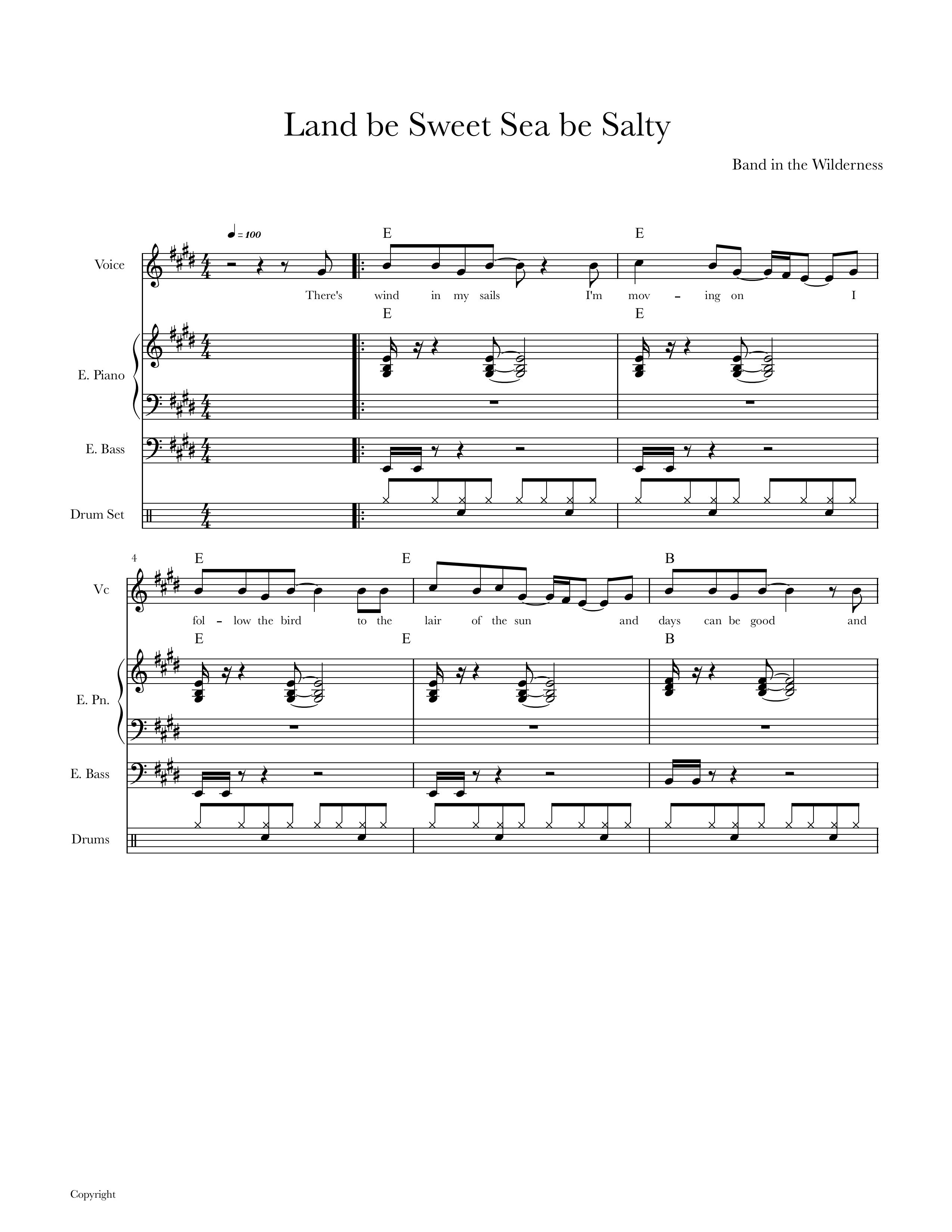
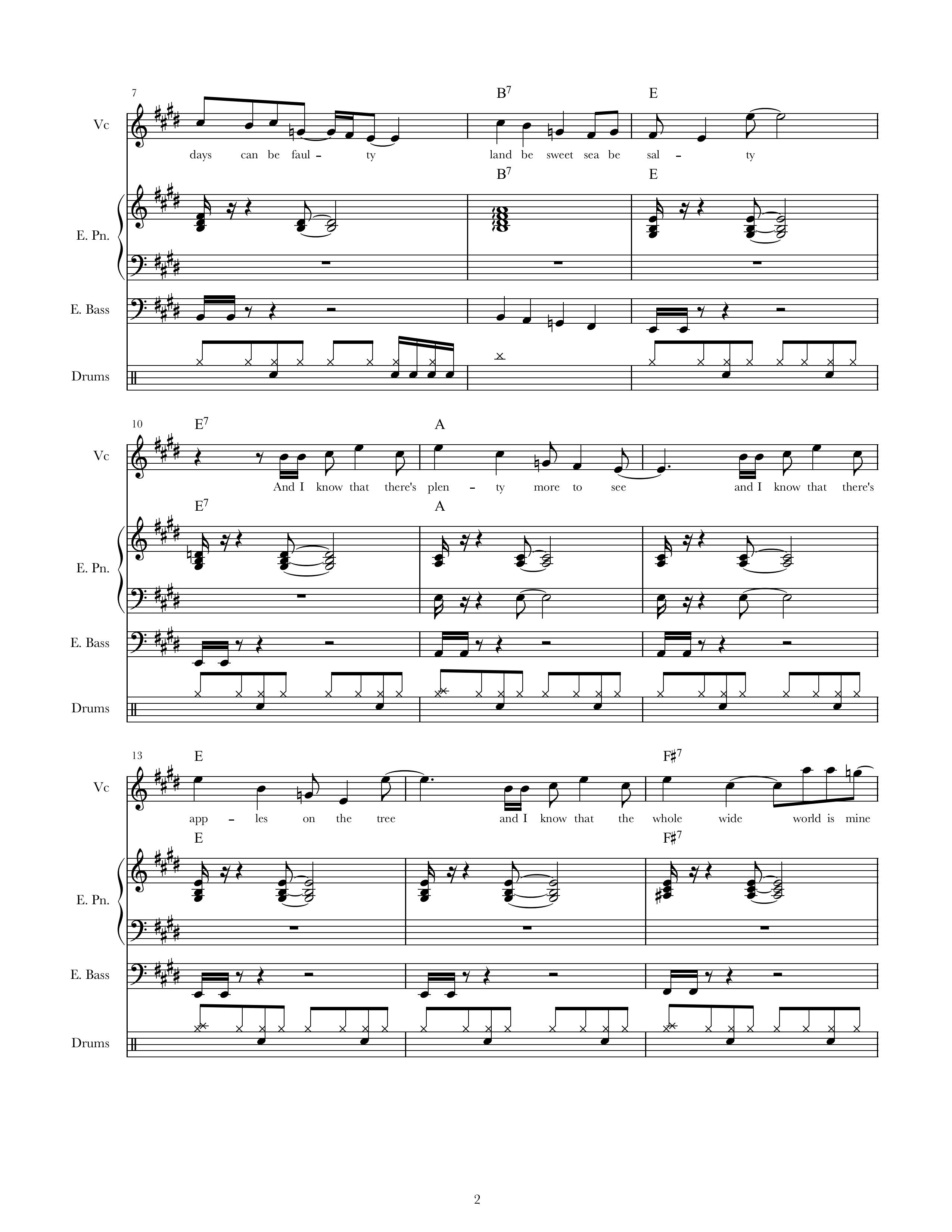
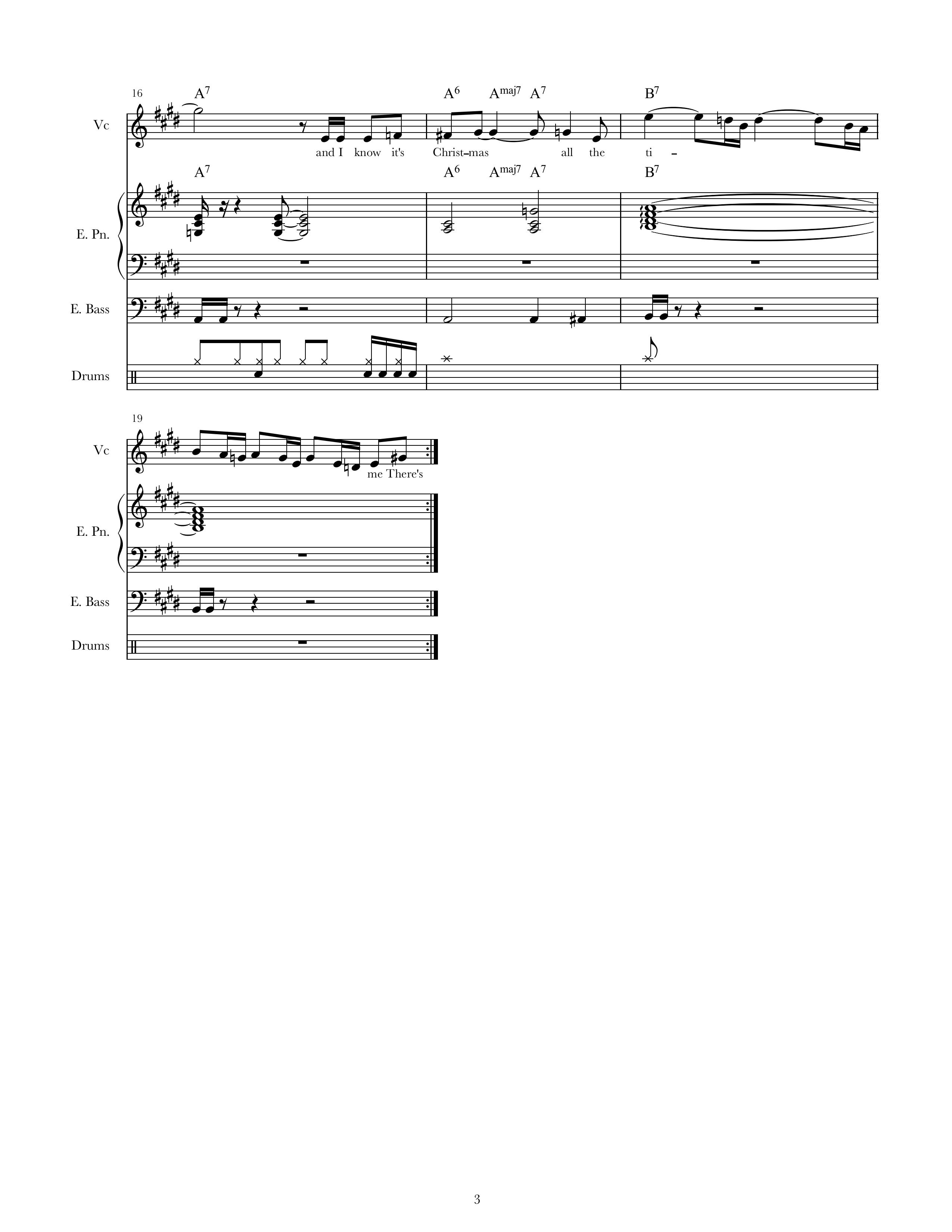
“Santa Claus used to live on my block,” I say. “Or at least a man who could have very well played him. His advice to the world was to take it easy.” I say it to no one in particular, just a musing on a sweet cool Friday night after the dog days of summer. I am glad to have made it to the grocery store before closing time. I am glad for this nice night.
At the end of the day it is another day’s ending and all living things take stock of their predicament in time. The band discard the shards of costume that survived the macaque attacks. For a while they sit and stare at the ground. Bob holds the tips of his right index finger and thumb to the middle of his lips and gently plucks at them while the middle phalanx of his index finger rests against the tip of his nose and his eyes are focused on a random spot on the ground. The others just stare and breathe.
Momentum spins the earth a mile to the east and Frank takes out his diary and opens it. Some miles later he has scribbled a note that reflects the band’s stance on their standing in actuality. “Oh, here we are,” says Jack. The earth has spun the band to that position relative to the sun where it is the perfect time for a brew. The new continent offers its own kind of brew. A brew made simply of tea leaves.
“These dried plant leaves really are amazing,” says Bob. “Just amazing.” He works the kettle and it takes him back to the days on the western mountains back east when yarrow was yarrow and field mint was field mint. When men were men and dust was dust until it rained and became deep impenetrable mud. The band roast some chestnuts to go with the brew and begin to feel much better. One might even say they begin to feel thankful.
Frank crafts a flute from a piece of bamboo. When the air begins to feel chilly the band add wood to the fire and Frank accompanies the dancing flames and glowing fragments with flute sounds both merry and mysterious. Are there more perils waiting in the bamboo darkness? Is the bird but a figment of a capricious reality that was questionable to begin with? For now these burdens are forgotten in the womb of warm comfort.
A saxophone swirls around the figures round the fire. Bongos add a beat, a guitar adds a rhythm and before long a groove ornaments the next couple of transitory hours in the kingdom of passing time. “We should have headbands,” thinks Jack. “White headbands to go with our blue rain jackets.” He pictures himself with a headband and to picture something is the cornerstone of creating it. A new day engulfs the forest with rays and hues that seem to be specially created from nature’s palette.
The band shave using oils and seashells and wash their faces in the basin of a waterfall. Jack tells the others of his vision of white headbands. They agree to tear strips from their cloths and bleach them in the sun. Bedecked with the headbands they look like professionals and to look like you know what you are doing carries gravitas in life. They pass a tract of cherry trees and there is a serenity about the band, the land and the general prospect.
The band make their course to the northward following the narrator’s sudden change of headings. At midday Bob experiments with yuzu juice in his kettle and the band reap the benefit of another of his brewing inventions. Far away to the northward they perceive a white tipped mountain that could offer a practical view of its environs. The band pass the afternoon in proceeding to the northward and arrive a bit closer to it in the evening. The black shape of a passing bird is observable in the moon which wants only a few days of being full.
“Have a good day,” says Bob to a fir tree. It is morning and the band get on the move having passed the night in motionlessness. Stirring their limbs through the reluctant activation of their nerve cells they propel themselves northward in increasingly supple ways. A bud here and a seed there are passed at the level of their feet where creatures and organisms are involved at smaller and bigger scales. The sun lifts off for the west and the band’s going north seems a trifle among the sum of things going every which way.
The humming of men meanders through the trees and the wilderness seems tame and carefree for a wonderful forenoon. It is good country and Frank unearths a burdock root and a truffle. Ideations of lunch spur Bob to look for mushrooms and tap the rim of his kettle. It is a rare gift of the fates to have a day of humming and tapping and contentment. Frank makes a note of it in his diary.
The band are feeling so good they decide to run using their headbands as sweat receptacles. They run singlefile and Bob addresses Jack who is running in front of him. “I love old cook books,” he says. “The older the better. They tell me people have always enjoyed nice food and that they will probably endeavor to enjoy nice food in the future. That’s comforting to me.” “That’s great,” says Jack. “Here have a pine nut.” He holds it between his fingers behind his back.
When it is time to make a fire the band are still feeling good. They take out the gear and start doodling on a song while resting their limbs and backs in comfortable positions round the fire. It takes a couple of hours to cement the song into something palatable and it is well after midnight when the band are ready to present it. “Ladies and gentleman,” says Bob. “This is called Glowing in the Dark.” He counts off in four four time.
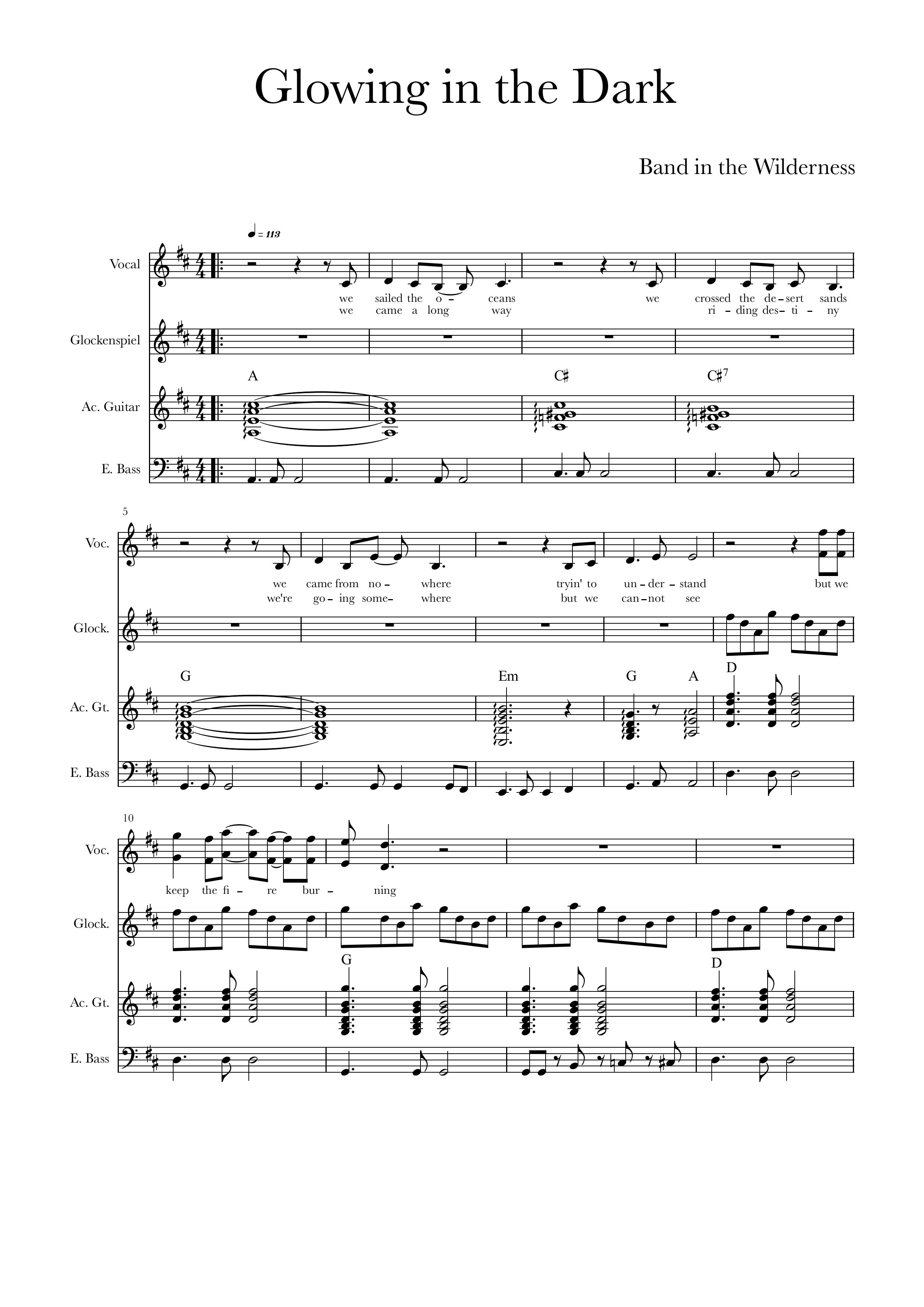
In the morning the band are woken by a horseman with a helmet in the shape of a fish. He has a sword strapped to his back and wears thick armor. He says things in a language unspoken by the band and sounds familiar but incomprehensible. There is nothing to be done but to spend the next couple of months learning the man’s language. Bob asks him if there is a library drawing books in the sand and a library lamp.
The band are led to a schoolhouse and placed among the children. When the teacher holds up a shoe the children shout “Kutsu!” When the teacher holds up a watering can the children shout “Jōro!” When the teacher holds up a shoe again the band fall in and shout “Kutsu!” It is in education that understanding is forged and it takes a couple of months to learn the man’s language.
Bob asks the man in his language to repeat his question. The man says that he is a warlord and asks to which army they belong. “We’re just a band,” says Bob. “We don’t belong to any army.” “But that’s dishonorable,” says the man. “Do you not believe in war? War has brought us peace and prosperity. Our war god is a fish. What do you believe in?” “I guess we believe in the spirit of Christmas and we follow the bird. Christmas has brought us great music, great lights and great food,” says Bob.
The man invites the band to the council of warlords. Distribution of power and wealth are discussed over tea and it is explained to the band that any disagreement may result in war. There is a disagreement over rice fields and war is narrowly prevented by the diplomatic intervention of one of the warlords. After the council it is this warlord who invites the band over to his palace for tea. The band have more tea and the tea is served by a woman with an adult physique but the innocence and wonder and expression of a young child.
“I guess the condition of my daughter has made me mild and more of a believer in diplomacy,” says the warlord. “Tell me more about this spirit of Christmas of yours.” “O, it is a celebratory time of thankfulness, kindness and forgiveness,” says Bob. “Something to look forward to and something to aspire to each time anew, particularly when we stray and lose our way among the hardships, toils and pitfalls of life. I love your tea, by the way.” The warlord thanks the band and sends them on their way with a life’s supply of tea in a large pack. It is a great gift. A great gift to haul up the mountain.
To be continued
 BAND IN THE WILDERNESS